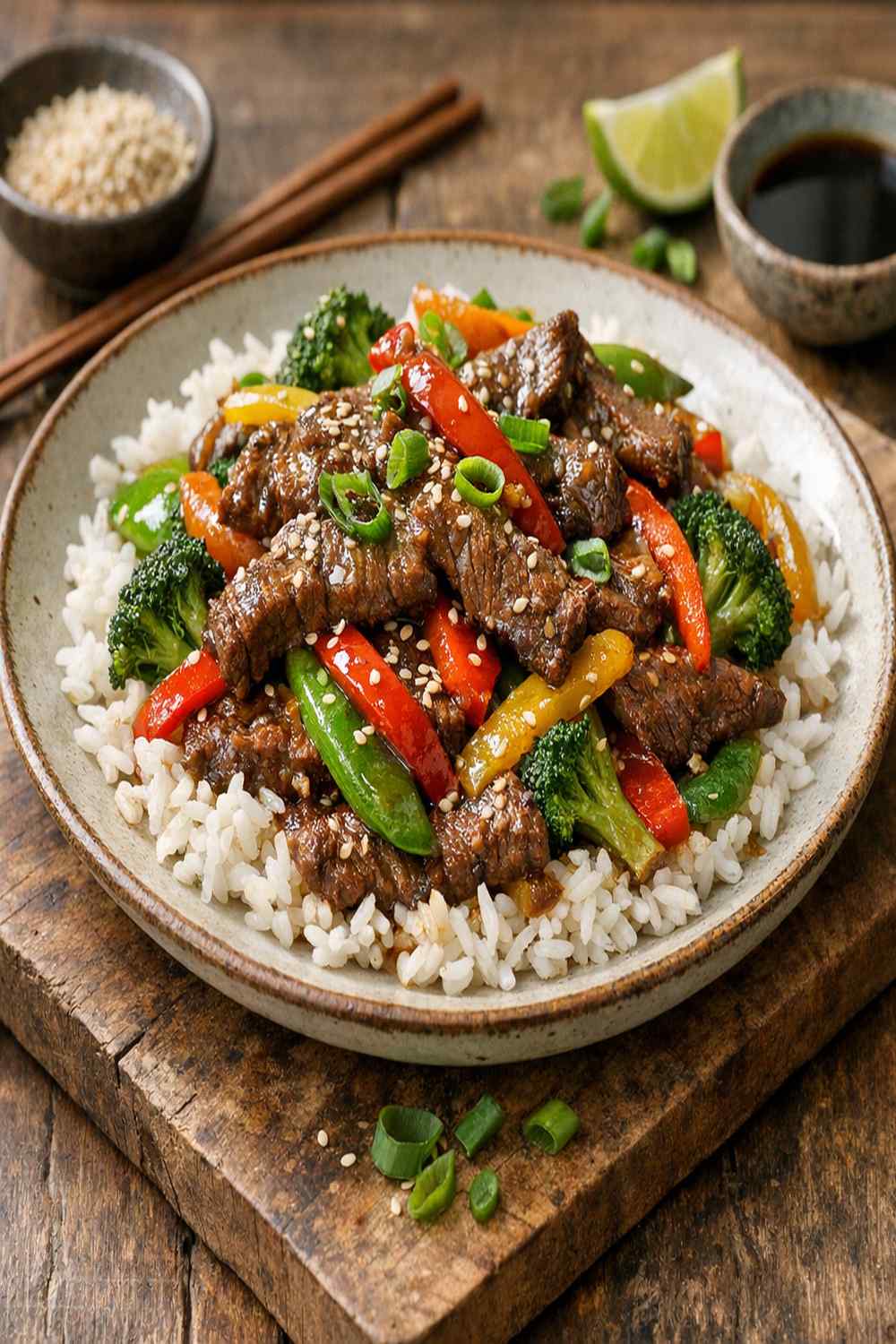

Ingredients
Method
Step 1: Prepare Your Beef With the Tenderizing Technique
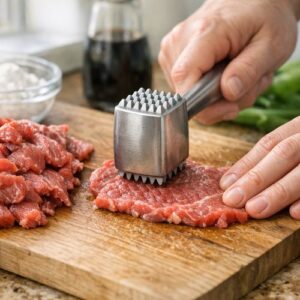
- If you're using leftover cooked beef, slice it thinly against the grain and set it aside. If you're using fresh or raw beef, this step becomes crucial. Pat your beef completely dry with paper towels—moisture is the enemy of a proper sear. Slice it thinly against the grain (this shortens the protein fibers, making them easier to chew). Now the magic: toss your sliced beef with the baking soda and let it sit for 15-20 minutes at room temperature. This isn't a shortcut—it's genuine food science. The baking soda raises the pH of the meat's surface, which denatures the proteins and allows them to bond with water molecules. The result? That silky, velvety texture you find at restaurants, not that tough, chewy texture from home cooking. This single step is the difference between good stir fry and crave-worthy stir fry.
Step 2: Create Your Sauce Components (Do This While Beef Rests)
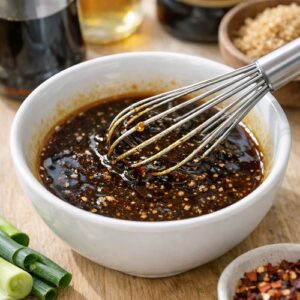
- While your beef is undergoing its transformation, let's build our sauce. In a small bowl, whisk together your soy sauce, oyster sauce, brown sugar, red pepper flakes, cornstarch, and the 2 tablespoons of water until completely smooth. This is your master sauce—it's doing heavy lifting by providing umami, sweetness, heat, and body all at once. In a separate small container, have your rice vinegar and sesame oil ready but separate. We'll add these at different times for different purposes. The vinegar adds brightness right before serving, while the sesame oil goes in at the very last second to preserve its delicate, toasted aroma. Mince your garlic finely and grate your ginger. This matters more than you might think—large pieces cook faster than small pieces, and we want even distribution of flavor throughout the entire dish. Separate your scallion into white parts (which go in with the aromatics) and green parts (which finish the dish for color and fresh flavor).
Step 3: Prep Your Vegetables for Quick, Even Cooking
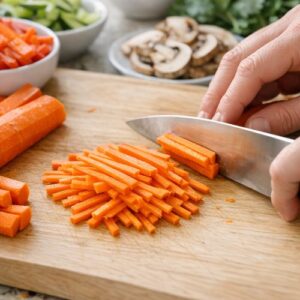
- The secret to a successful stir fry isn't exotic ingredients—it's proper knife work and even sizing. Slice your carrots into matchsticks about ⅛-inch thick. Slice your bell pepper into strips of similar thickness. Slice your onion against the grain, keeping the pieces bite-sized. Why does this matter? Stir frying happens fast—we're talking 4-5 minutes total cooking time for vegetables once they hit the heat. If your pieces are different sizes, some will be crunchy-raw while others turn to mush. Uniform sizing ensures everything reaches that perfect tender-crisp texture simultaneously. Arrange all your prepped ingredients within arm's reach of your cooking vessel. Once we start cooking, there's no time to step away and chop. Stir frying rewards preparation and punishes hesitation.
Step 4: Heat Your Wok or Skillet to the Right Temperature
- This might be the most important step, and it's often overlooked. Place your wok or large skillet over high heat for 2-3 minutes before adding any oil. You should be able to hold your hand about 6 inches above the surface for only 2-3 seconds before it's uncomfortably hot. Why so hot? High heat creates the Maillard reaction—that beautiful browning that develops complex, savory flavors. It also keeps vegetables from releasing too much water, which would steam them instead of sear them. Low or medium heat is the enemy of great stir fry. Once your vessel is properly hot, add your oil in a thin stream around the edges of a wok (or directly into a skillet). Let it heat for just 10-15 seconds—you should see it shimmer and move easily.
Step 5: Cook Your Beef First, Then Remove It
- This is crucial: we're not cooking everything together. We cook each component separately because they need different cooking times and techniques. Add your beef to the screaming hot pan in a single layer. Resist the urge to stir immediately—let it sit for 30-45 seconds to develop color and crust. If you're using cooked leftover beef, you only need to warm it through and add a light sear (about 1 minute total). If you're using raw beef, cook it until it's just barely done—about 2-3 minutes for medium-rare, which is what you want since we'll likely eat this immediately. Remove all the beef to a clean plate. Some fond (those browned bits) might stick to the pan—don't wash it. That's liquid gold for flavor.
Step 6: Sear Your Hearty Vegetables First
- Add your sliced onions and carrot matchsticks to the same hot pan. These vegetables need more cooking time than delicate peppers or herbs. Let them sit without stirring for about 1 minute to develop color, then toss and cook for another 1-2 minutes. You want them to have some color but still maintain a slight firmness. If your vegetables were already leftover and cooked, you'll only need to warm them through—about 30 seconds of tossing. Fresh vegetables need the full 2-3 minutes.
Step 7: Add Aromatics and Secondary Vegetables
- Push your cooked vegetables to the side of your pan, creating a little well in the center. Add your minced garlic, grated ginger, and the white parts of your scallion to this empty space. Let them sit in direct contact with the hot pan for just 15-20 seconds—this "blooms" their essential oils and distributes their aroma throughout your dish. Now add your bell pepper strips and toss everything together. Cook for another 1-2 minutes until the peppers have softened slightly but still have some snap to them. This is the tender-crisp texture we're after—vegetables that have flavor and warmth but haven't lost their structural integrity.
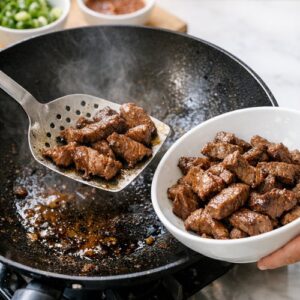
Step 8: Return the Beef and Build Your Sauce
- Add your beef back to the pan along with all its accumulated juices. Give your sauce mixture a final stir to ensure the cornstarch is suspended (it settles), then pour it over everything. Toss continuously for about 30-45 seconds until the sauce thickens and coats everything evenly. You'll see the sauce transform from cloudy to glossy and translucent—that's the cornstarch doing its job. This creates that beautiful, restaurant-style coating that makes the dish feel substantial and finished.
Step 9: Finish With Brightness and Aroma
- Remove your pan from heat. Add the rice vinegar and toss to combine—this brightens everything and prevents the dish from feeling heavy. Drizzle your sesame oil over the top and fold it in gently. Sesame oil is delicate and its flavor is best preserved when not exposed to heat. Taste and adjust seasoning with salt and pepper. Different soy sauce brands have different sodium levels, so this final tasting is important. Some people prefer more heat—add more red pepper flakes here if needed.
Step 10: Plate and Garnish for Maximum Impact
- Transfer your stir fry to serving bowls or plates. Scatter the green parts of your scallion and the sesame seeds over the top. These final garnishes aren't just pretty—the raw scallion adds a bright, fresh contrast to the warm cooked components, and the sesame seeds add a subtle nutty crunch that makes the dish feel complete. Serve immediately over steamed white rice, brown rice, or cauliflower rice depending on your preference. The heat of the stir fry will warm your serving vessel and rice if you time it right.
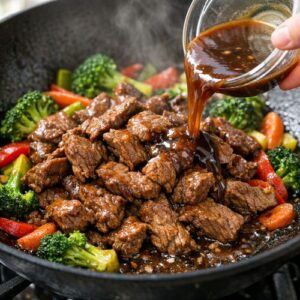
Nutrition
Notes
- Overcrowding the pan - This is the #1 error. When you add too much at once, the temperature drops, steam replaces sear, and you end up with steamed vegetables instead of stir-fried ones. Work in batches if needed, or use a larger vessel. Restaurant woks are wide and shallow precisely for this reason.
- Adding sauce too early - Sauce introduced before vegetables are properly cooked will steam everything and prevent browning. Always sear first, sauce last.
- Insufficient heat - If your pan isn't properly preheated, nothing will sear correctly. Give your heat source 2-3 minutes before you start cooking. The moment you add beef or vegetables, you should hear an aggressive sizzle.
- Not slicing against the grain - The grain of the meat is the direction of the muscle fibers. Slicing perpendicular to these fibers shortens them, making the meat tender. Slicing with the grain leaves long fibers that become chewy. This single detail transforms texture completely.