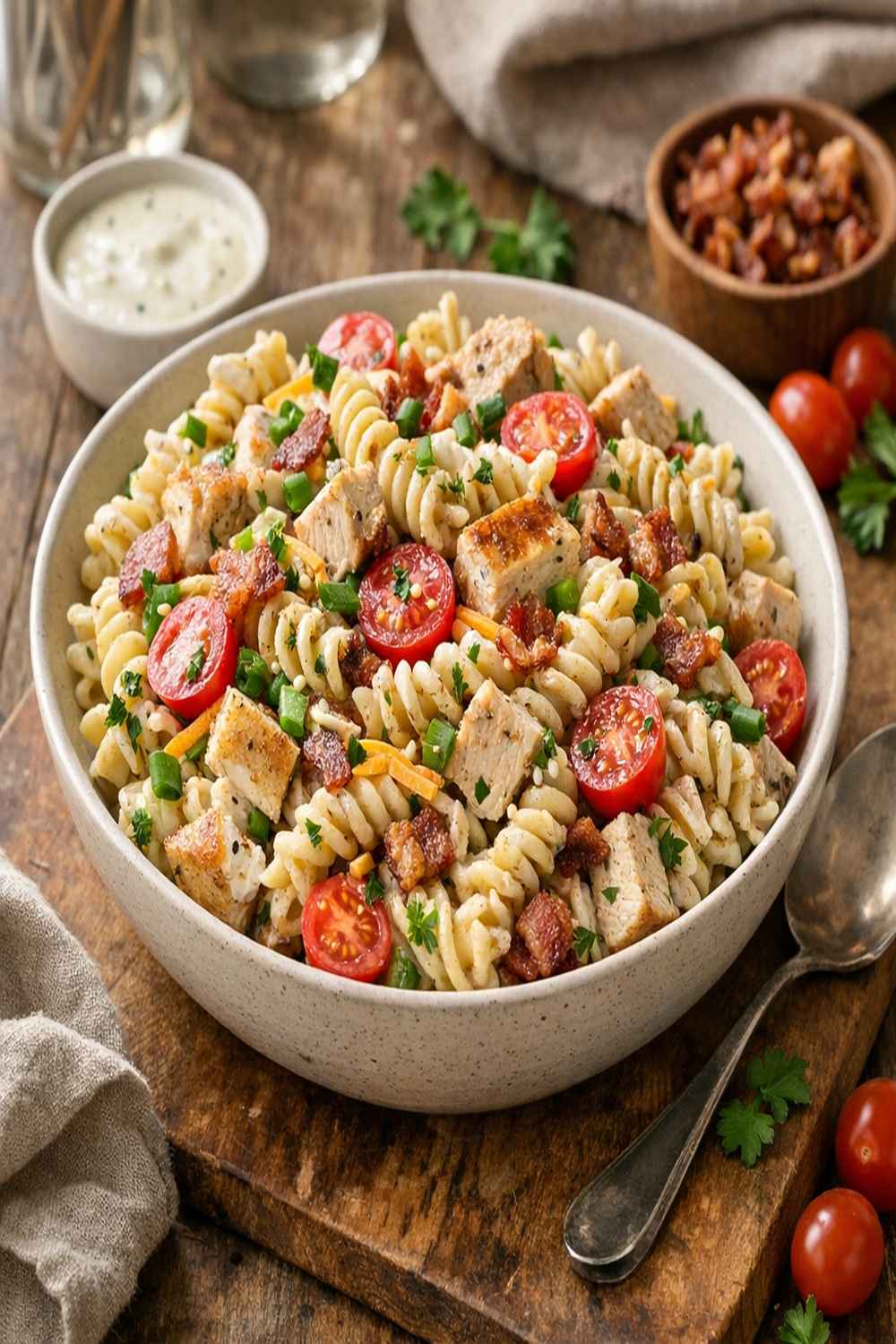

Ingredients
Method
Step 1: Cook and Cool the Pasta Foundation
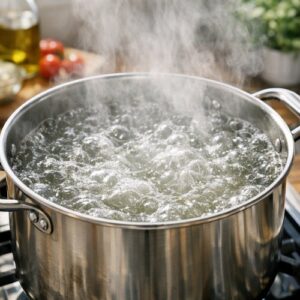
- Fill a large pot with 6 quarts of water and bring it to a rolling boil—this is crucial, not a gentle simmer, but a genuine boil where steam rises vigorously. The intense heat is what creates the right starch gelatinization. Add 2 tablespoons of sea salt to the water. This isn't just for flavor; the salt raises the boiling point slightly and seasons the starch itself, which means better flavor throughout the salad. Add your 1 pound of rotini pasta and stir immediately and continuously for the first 30 seconds. This prevents sticking and ensures even heat distribution. Cook according to package directions, but here's my secret: remove the pasta 1 minute before the package suggests it's done. We want it at al dente—tender but with just a tiny bit of resistance when you bite it. This matters because the pasta will continue to absorb liquid as it cools and sits in the dressing, so that remaining bite of firmness ensures your final salad isn't mushy. Drain the pasta in a colander, but don't rinse it yet. The starch coating on the pasta is actually your friend right now—it helps the warm pasta accept the dressing more readily. Instead, spread the hot pasta on a sheet pan in a thin layer and let it steam-cool for 5 minutes. This stops the cooking process while the residual heat is still present, which means the pasta is more porous and ready to absorb dressing than it would be if it were completely cold.
Step 2: Prepare Your Protein Components While Pasta Cools
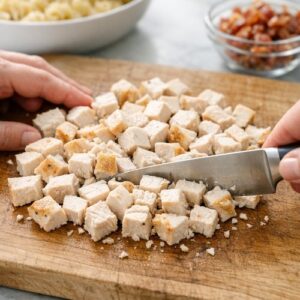
- While the pasta is cooling, dice your 2 cups of cooked chicken breast into ½-inch pieces. The size matters—too small and the chicken disappears into the dressing, too large and it doesn't integrate. You want pieces that are substantial enough to bite through but small enough to coat evenly. If you're cooking the chicken yourself, remember that chicken continues to cook from residual heat after you remove it from the pan, so pull it off the heat when the internal temperature is 160°F, not 165°F. It will reach that target temperature as it rests. Your bacon should already be cooked until crispy but not brittle—it should still have a tiny bit of flexibility when you first remove it from the heat, because it will continue to crisp as it cools. Chop it into ½-inch pieces. The rendered bacon fat is essential to this dish's flavor profile, so if you've cooked it in a pan rather than in the oven, reserve a tablespoon of that fat to drizzle over the salad just before serving.
Step 3: Compose Your Vegetable and Herb Elements
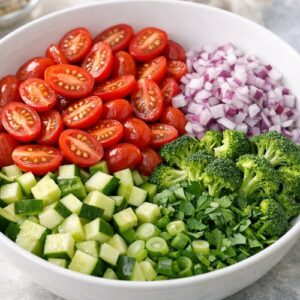
- Halve your grape tomatoes lengthwise—this exposes more surface area and allows them to release their flavorful juice into the dressing as the salad sits. Don't cut them the day before, though; tomatoes release too much water if left exposed for more than an hour, which will oversaturate your dressing. This is why I recommend composing this salad just a few hours before serving, not a full day ahead. Dice your English cucumber into ¼-inch pieces. The smaller size is intentional here—cucumber is 96% water, and smaller pieces mean more surface area to hydrate the other components evenly. If you're using regular cucumber instead of English, scoop out the seed core with a spoon, because those seeds are waterlogged and will make your salad soggy. Chop your fresh parsley just before assembly. Fresh herbs oxidize quickly and turn bitter when cut, so timing matters. You want bright, vibrant green color, not the dull olive-green that comes from sitting around after chopping.
Step 4: Create the Perfect Assembly Bowl
- Use a large mixing bowl—large enough that you can toss the salad with room to move (I use a 6-quart bowl for this recipe). Add your room-temperature pasta first, then the diced chicken. The heat from the pasta is still present at this point, which means the chicken will warm slightly and become more tender. Add the cooled bacon and reserved bacon fat. Now sprinkle your dry seasonings directly onto the pasta mixture: sea salt, ground black pepper, onion powder, and garlic powder. Adding powdered seasonings to warm pasta means they dissolve and distribute more evenly than if you added them when cold. This is a professional technique that prevents pockets of too-salty or too-strong flavor.
Step 5: Add Vegetables and Integrate the Emulsion
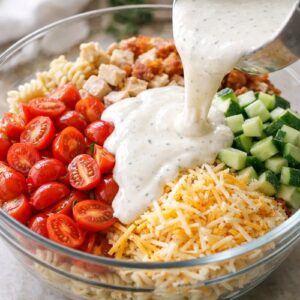
- Add your halved grape tomatoes and diced cucumber to the bowl. Pour in your 1½ cups of ranch dressing, then add about three-quarters of your shredded cheddar cheese (reserve ¼ cup for topping). The cheese melts slightly into the warm pasta and creates additional creaminess, which is why we don't add all of it now—we want some unmelted cheese on top for textural contrast. Using a large spoon or rubber spatula, gently fold the mixture together with deliberate, controlled motions. Don't stir in quick circles—instead, use a folding motion where you bring the bottom ingredients up and over the top. This distributes the dressing evenly while preventing the pasta from breaking (which would release excess starch and make the salad gummy). Fold for about 20-30 seconds until everything is evenly coated and no dry patches of pasta remain.
Step 6: Final Seasoning and Strategic Resting
- Add your 2 tablespoons of fresh lemon juice and about half of your chopped parsley. The acid brightens all the flavors and prevents the richness from feeling heavy. Taste a spoonful and adjust seasoning if needed—remember, the salad will absorb more dressing as it sits, so you're seasoning for its final state, not its current state. Transfer the salad to a serving bowl or storage container and top with the remaining cheese and parsley. Now comes the critical part that separates good salad from transcendent salad: refrigeration time. Cover and refrigerate for at least 2 hours, preferably 4-6 hours. During this time, the pasta continues to absorb dressing, the vegetables release their liquid and season the entire mixture, and the flavors marry together in ways they simply cannot if served immediately. Just before serving, give the salad a gentle stir and add a splash more dressing if needed—it will have absorbed quite a bit by now. Cold temperatures suppress flavor perception, so what tasted perfectly seasoned at room temperature might taste slightly underseasoned when cold. This is normal and why we adjust before serving.
Nutrition
Notes
- The Separated Dressing Problem - You open your salad to find oil pooled on the bottom and dry pasta on top. This happens when the emulsion breaks, usually because the dressing temperature changed too drastically or because you used a dressing with unstable emulsifiers. Next time: use a higher-quality ranch dressing, or make your own using mayonnaise (which has built-in stabilizers). You can also rescue this by draining the separated oil and adding fresh dressing mixed with a tablespoon of vinegar or lemon juice, which re-emulsifies the mixture.
- The Mushy Pasta Problem - The pasta disintegrates when you try to serve it, and the salad feels more like porridge than salad. This means you cooked the pasta too long initially, or you let the salad sit too long after assembly, or you added too much dressing. Prevention: cook pasta to al dente (1 minute under package directions), assemble no more than 8 hours ahead, and remember that you can always add more dressing but you can't remove it.
- The Flat Flavor Problem - Everything tastes okay but uninspired. The individual components taste like themselves but don't sing together. This is usually a salt and acid problem—you need more seasoning and more fresh lemon juice or vinegar. Add 1 teaspoon of fresh lemon juice, stir, taste, and repeat until bright. Then add ¼ teaspoon salt, stir, and taste again. Bright and salty is what you're after.
- The Oversalted Problem - Everything tastes aggressively salty and the vegetables feel mushy. Salt draws moisture from vegetables, and if you overseasoned, those vegetables have released all their water into the salad. Prevention: always season the warm pasta initially, then taste before adding the dressing (which already has salt). Add additional salt conservatively, just ¼ teaspoon at a time.