This post contains affiliate links. As an Amazon Associate I earn from qualifying purchases.
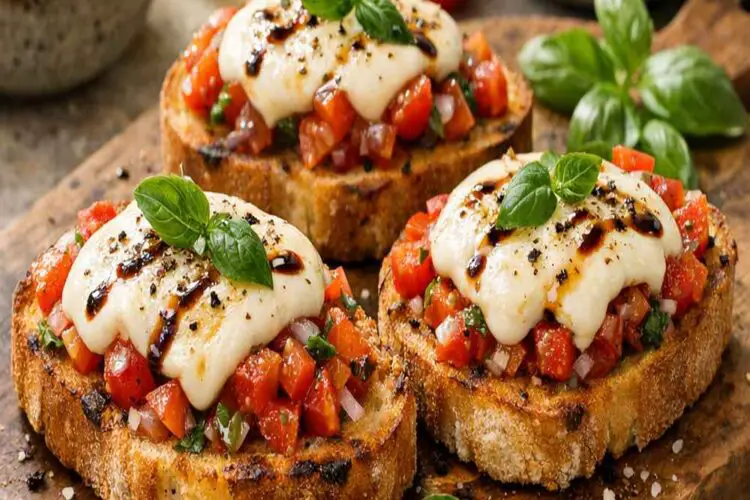
There’s something magical about bruschetta with mozzarella—it’s the kind of appetizer that feels restaurant-worthy yet requires no fancy cooking skills. We love pairing this with crisp aperitif wines, fresh salads like our my favorite salad, or even as a light starter before heartier mains like Asian Beef Recipe for a beautifully balanced dinner party.
How My Multicultural Kitchen Taught Me to Love Bruschetta
I still remember standing in my grandmother’s kitchen in Liguria, watching her hands move with practiced efficiency as she assembled bruschetta for our Sunday gathering. She never measured anything—just scattered tomatoes, basil, and cheese with the confidence of someone who’d made the same dish a thousand times. What struck me most wasn’t the simplicity; it was how she treated each component like it deserved respect.
Years later, after developing hundreds of recipes across multiple cuisines, I’ve come to understand that bruschetta with mozzarella represents something profound about Italian cooking: the art of letting quality ingredients speak for themselves. There’s no heavy cream, no complicated technique, no long ingredient list to hide behind. Just the pure flavor of ripe tomatoes, fresh basil, creamy mozzarella, and good olive oil dancing together on toasted bread.
This recipe has become my go-to for entertaining because it teaches us all something valuable: mastery isn’t about complexity—it’s about understanding the fundamental flavors you’re working with and respecting their individual integrity.
What is Bruschetta With Mozzarella?
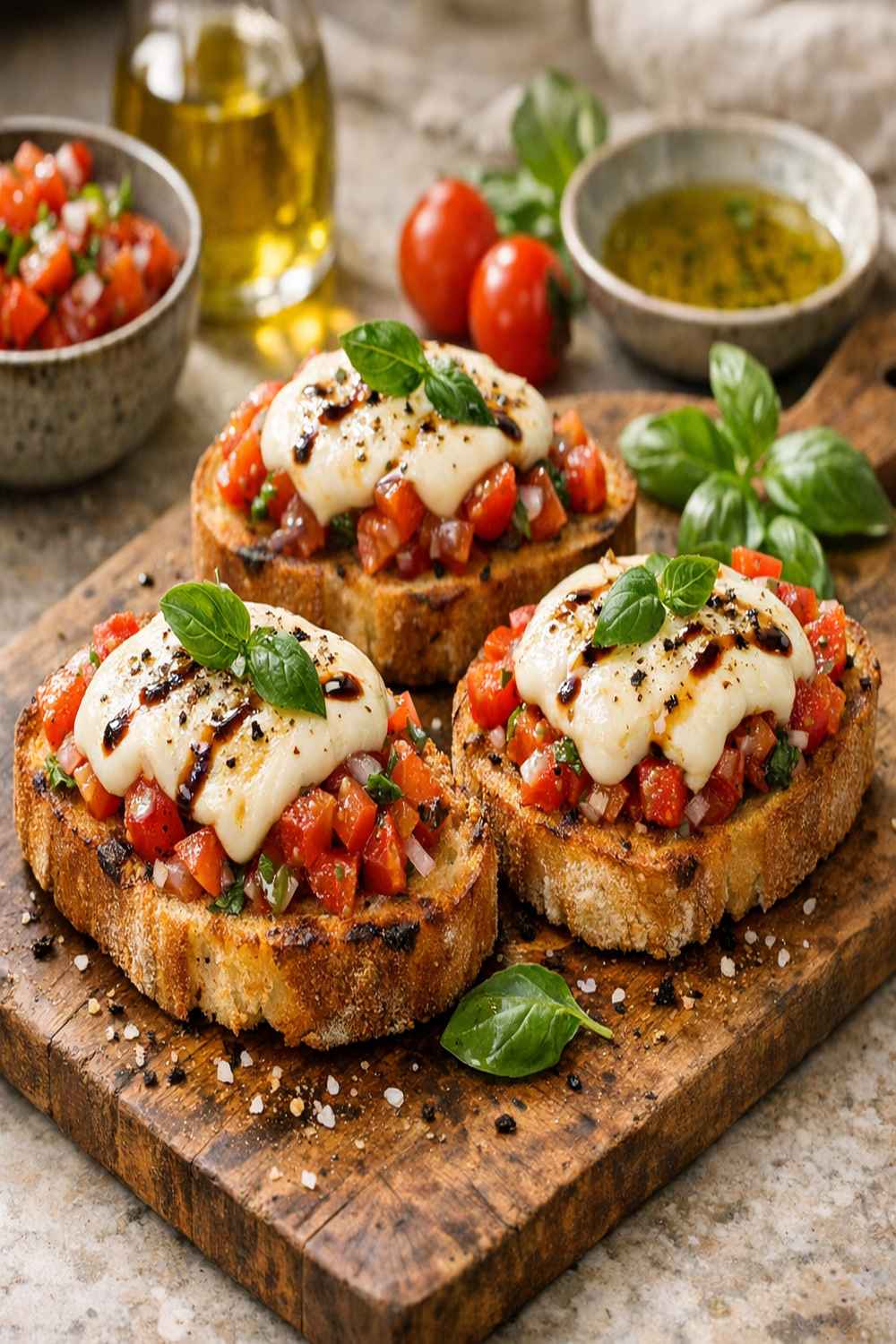
Bruschetta with mozzarella is an Italian antipasto that originated in Tuscany, though it’s now beloved throughout Italy and beyond. The word “bruschetta” comes from the Italian verb “bruscare,” meaning to roast over coals, referencing the traditional way the bread was prepared over an open flame.
Traditional bruschetta features toasted bread rubbed with garlic and topped with a simple tomato mixture. Our version elevates this classic by adding fresh mozzarella—typically bocconcini (small mozzarella balls) or hand-torn fresh mozzarella—which brings a creamy, cooling contrast to the bright acidity of the tomatoes.
What makes this version truly special is the balance. The warm, garlicky bread provides textural contrast and a slight char. The tomato topping brings brightness and acidity. The fresh mozzarella adds richness and creaminess. The basil ties everything together with its aromatic, peppery notes. When assembled properly and served immediately, you get a symphony of flavors and textures in every single bite.
Why You’ll Love This Bruschetta With Mozzarella Recipe
- Minimal prep, maximum flavor – This recipe requires no cooking skills beyond toasting bread. You’re essentially assembling gorgeous ingredients rather than “cooking” in the traditional sense, making it perfect for busy weeknights or last-minute entertaining.
- Uses just seven ingredients – Each component is essential and contributes meaningfully to the final dish. This isn’t minimalism for the sake of it; it’s by design, allowing each flavor to shine without competition.
- Ready in under 15 minutes – From pantry to table, we’re talking about a quarter-hour. This makes it ideal for spontaneous entertaining or when you need an elegant starter without the stress.
- Naturally vegetarian and gluten-free adaptable – As written, this recipe is completely vegetarian. Simply swap the sourdough for your favorite gluten-free bread if needed.
- Scales beautifully for any crowd – Making this for two people or twenty? The ratios work perfectly at any scale, and you can prep components ahead and assemble just before serving.
- A lesson in ingredient quality – This recipe taught me early in my career that when you have so few ingredients, each one matters profoundly. It’s a masterclass in why sourcing quality tomatoes, proper mozzarella, and excellent olive oil isn’t a luxury—it’s essential.
The Ingredients
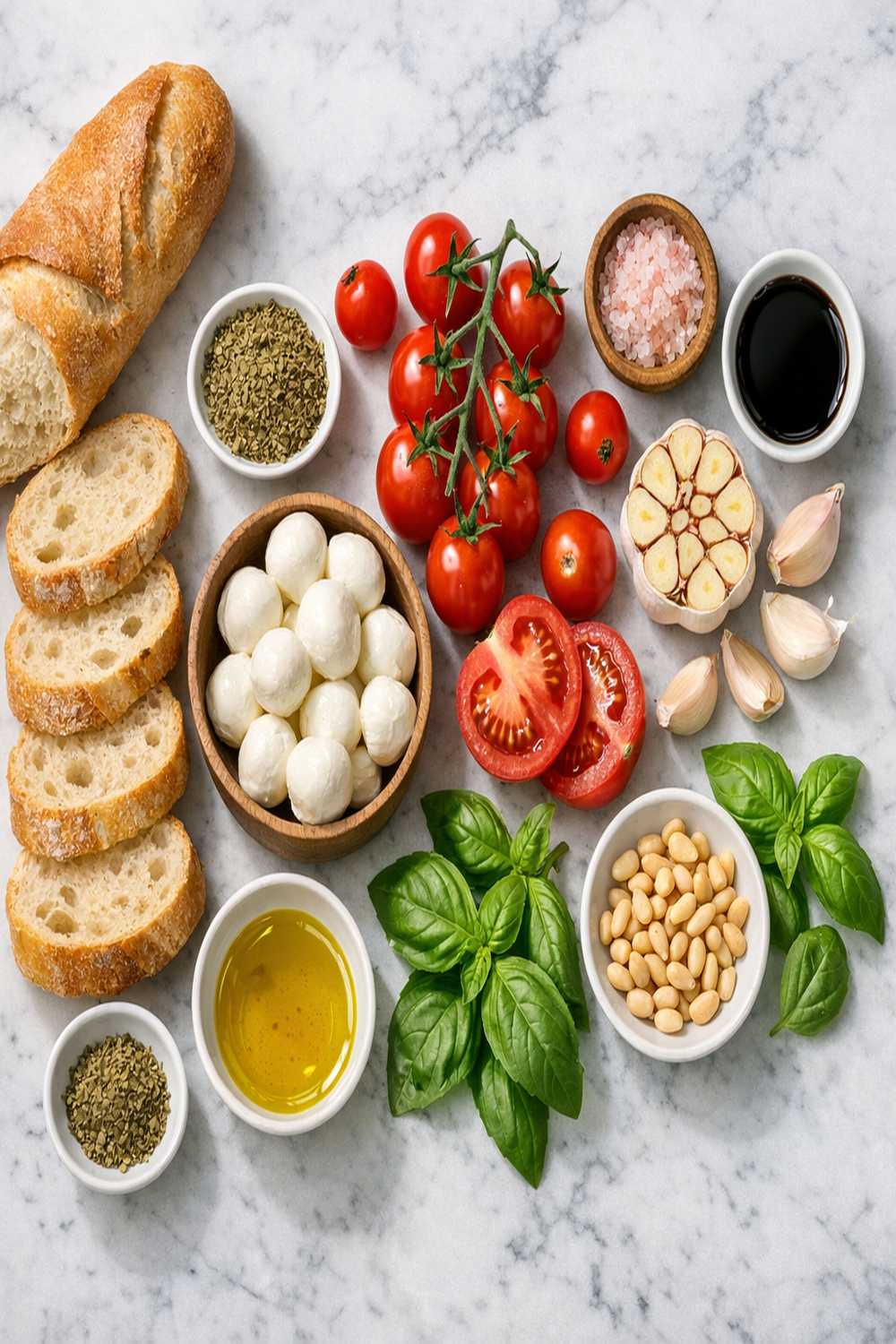
Before we dive in, let me share what I’ve learned about each ingredient through years of developing recipes across Mediterranean cuisine. This recipe makes approximately 16 bruschetta pieces (serving 4-6 people as an appetizer), and every single element deserves attention.
- 4 medium-to-large tomatoes (ripe but still holding their shape)
- ½ teaspoon freshly ground black pepper (optional but recommended for balance)
- 1 teaspoon kosher salt (plus additional for finishing)
- 8 slices sourdough bread (cut into ½-inch thick slices, or just under 1.5 centimeters)
- 4 ounces bocconcini mozzarella (or fresh mozzarella ball, about 115 grams)
- 1 cup fresh basil leaves (loosely packed, preferably sweet Genovese variety)
- 3 tablespoons extra virgin olive oil (plus additional for finishing drizzle)
- 2 garlic cloves (fresh, firm, and pungent)
A note on sourcing: I cannot stress enough how important ingredient quality is here. Your tomatoes should be in-season, preferably from a farmers market where you can taste before buying. The olive oil should be extra virgin and have a harvest date within the past year. Fresh mozzarella should smell sweet and milky, never sour. These aren’t fancy preferences—they’re the difference between “fine” bruschetta and absolutely transcendent bruschetta.
How to Make Bruschetta With Mozzarella?
We’re going to work strategically here, preparing components in an order that minimizes last-minute fussing while maximizing freshness. The beauty of this recipe is that almost everything can be done ahead—we just assemble at the final moment to prevent the bread from becoming soggy.
Step 1: Prepare Your Tomato Mixture (Make This First)
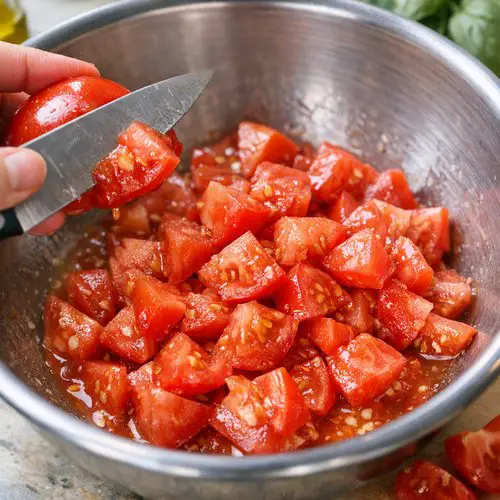
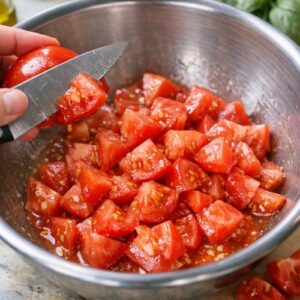
Start by cutting your tomatoes roughly over a medium bowl to capture every precious drop of juice. I cut mine into irregular chunks about ¾-inch pieces—not too fine, or they’ll turn into mush, but not so large that you can’t get a piece in every bite. As you cut, you’ll notice the juices pooling in the bowl; this is liquid gold for our bruschetta.
Once all tomatoes are cut, tear your fresh basil leaves by hand (never cut basil with a knife, as the metal bruises the delicate leaves and causes browning). Add the torn basil to the tomato bowl along with 3 tablespoons of excellent extra virgin olive oil and 1 teaspoon of kosher salt. Stir gently to combine, being careful not to crush the tomato pieces.
Let this mixture sit for 5-10 minutes at room temperature. During this time, the salt will draw out additional moisture from the tomatoes, creating a more flavorful liquid. This is the foundation of your bruschetta—it should smell bright, herbaceous, and absolutely irresistible.
Step 2: Prepare the Garlic (Do This While Tomatoes Rest)
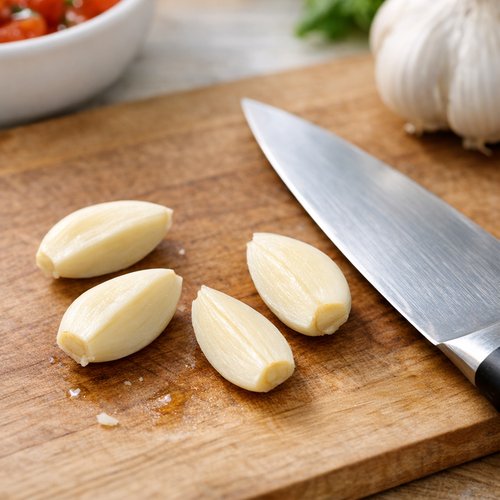
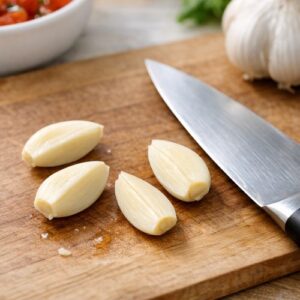
While your tomato mixture is resting, peel your two garlic cloves and cut each one in half lengthwise, creating four halves total. Choose firm, fresh garlic cloves that have no green sprout in the center (the sprout indicates age and bitterness). These halves will be used to rub the warm bread, infusing it with garlic flavor without overwhelming the delicate tomato and mozzarella.
Set your garlic halves aside on a cutting board. They’ll be most effective when the bread is still warm from toasting, so timing matters here.
Step 3: Toast the Bread to Perfect Crispness
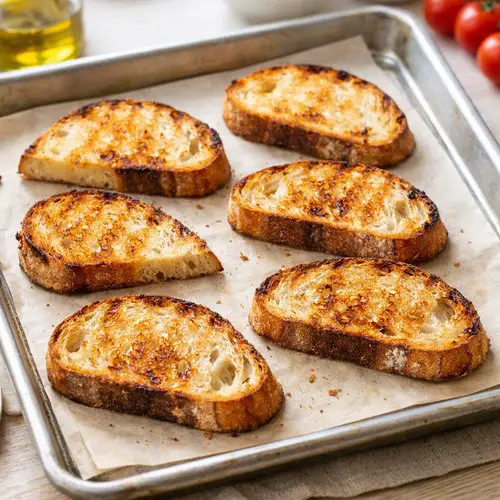
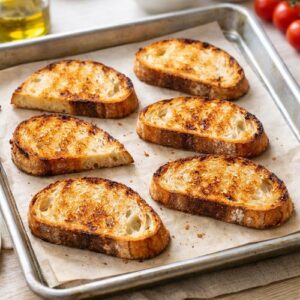
Arrange your 8 sourdough slices on a baking sheet in a single layer. If your slices are quite thick, you might want to cut each slice diagonally to create triangular pieces—this is traditional and creates more surface area for toppings. Place the baking sheet under a preheated broiler set to high, positioning it about 4-5 inches from the heat source.
Toast for 2-3 minutes, watching carefully, until the bread is golden brown and crispy on the surface but still slightly yielding inside. The bread should smell nutty and toasted, never burnt. Remove immediately from the broiler and let rest for about 30 seconds—this residual heat is perfect for the next step.
Expert’s tip: Sourdough works beautifully here because its slightly chewy crumb and open structure hold up to the wet tomato topping better than softer breads. The natural fermentation also adds complexity that complements the simple toppings.
Step 4: Rub Warm Bread With Fresh Garlic
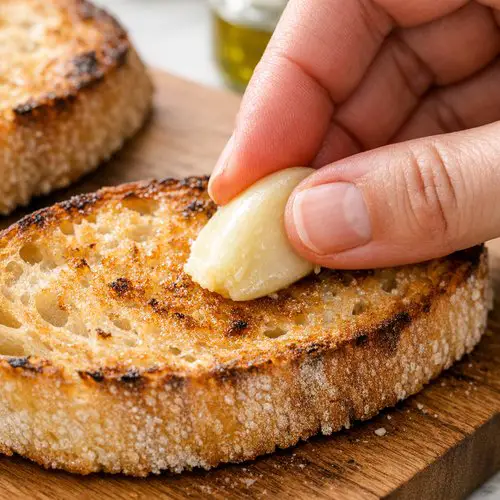
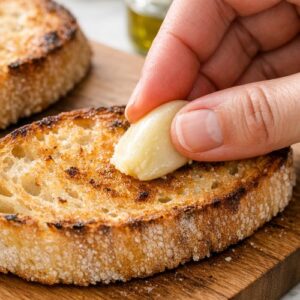
This step happens immediately after toasting—timing is crucial. Take one of your garlic halves and vigorously rub the warm surface of each toasted bread slice. You’ll see the garlic almost disappear into the bread as it warms and slightly melts. The warmth of the bread activates the garlic’s aromatics, distributing them evenly.
Rub all eight slices, using the same garlic half for multiple pieces—you’ll know when to switch to a fresh half when the garlic gets small and difficult to hold. This creates a subtle but unmistakable garlic presence that enriches the entire experience without screaming “garlic” at you.
Step 5: Top With Tomato Mixture and Its Precious Juices
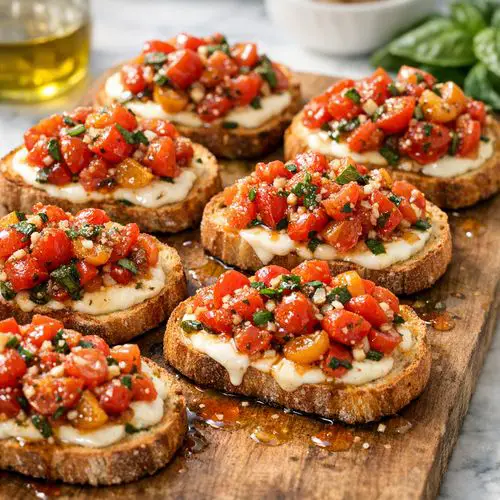
Divide your tomato mixture evenly among the eight bread slices. Here’s where I typically give you a measurement, but honestly, I assess by eye: you want enough tomato and basil to cover the surface generously without leaving puddles of juice that will soak immediately into the bread.
Depending on how juicy your tomatoes were, you might use all the liquid or reserve some. I usually spoon most of the tomato pieces onto the bread, then drizzle about half the accumulated juices over top—this gives maximum flavor without maximum sogginess. The bread should darken slightly from the moisture but shouldn’t be swimming.
Step 6: Tear and Scatter Fresh Mozzarella
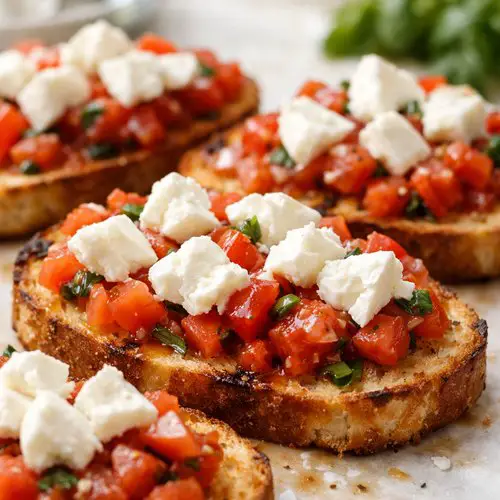
Tear your bocconcini or fresh mozzarella into bite-sized pieces—roughly ½-inch chunks—and scatter them over the tomato topping. The warmth from the bread will slightly soften the mozzarella, creating pockets of creaminess. The contrast between the cool cheese and warm bread is part of the magic here.
Distribute the mozzarella evenly so each piece of bruschetta gets a fair share. You should have enough to cover each slice with 3-4 mozzarella pieces.
Step 7: Finish With Oil and Salt, Then Serve Immediately
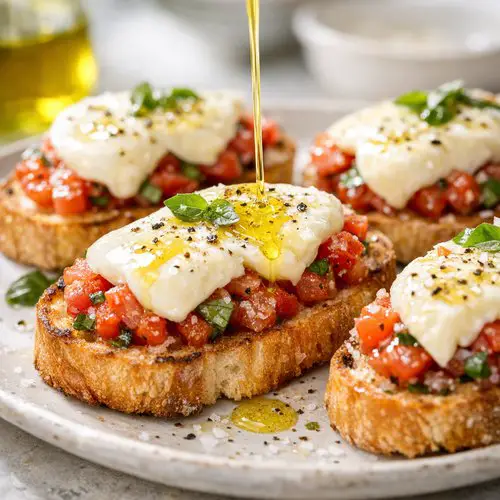
Drizzle each bruschetta with just a whisper more of your best extra virgin olive oil—this final drizzle is where you can really showcase a premium oil if you have one. The oil should glisten on the surface, adding richness and helping to bring all the flavors together.
Finish with a tiny pinch of fleur de sel or another finishing salt and freshly ground black pepper if desired. The salt crystals on top add a textural pop and emphasize the salinity of the tomato.
Serve immediately. This cannot be overstated. Bruschetta with mozzarella is best eaten within 2-3 minutes of assembly, while the bread is still crispy and the mozzarella is still holding its shape. This is finger food that demands to be eaten hot and fresh.
Tips and Tricks From My Kitchen to Yours
- Choose the right tomatoes – Heirloom varieties or locally-grown tomatoes in peak season will always outperform greenhouse tomatoes in winter. If you can taste the tomato before buying, do it. You’re looking for sweetness, acidity balance, and a tomato that feels substantial, not hollow.
- Room temperature is essential – Remove all ingredients from the refrigerator 30 minutes before assembly. Cold mozzarella won’t showcase its creamy texture, and cold tomatoes won’t express their full flavor. This is a simple step that dramatically improves your results.
- Don’t skip the salt step – Letting the tomato mixture rest with salt draws out juice and actually makes the tomatoes firmer, preventing the mushy texture that ruins bruschetta. This 5-10 minute rest is non-negotiable in my kitchen.
- Make-ahead strategy – Prepare the tomato mixture (including basil and salt) up to 2 hours ahead. Toast the bread and rub with garlic up to 30 minutes ahead, storing it in an airtight container. Assemble the final bruschetta no more than 3 minutes before serving.
- Toast bread at the last possible moment – If you toast bread too far ahead, it becomes chewy and loses its crispness. The residual heat from the oven is part of what makes this work, so time your toasting to coordinate with your guests arriving or your serving moment.
- Quality olive oil matters more here than anywhere – With only seven ingredients, there’s nowhere for mediocre oil to hide. Invest in a truly excellent extra virgin olive oil. The difference is transformative.
- Tear, don’t cut, the basil – I know I mentioned this in the steps, but it’s worth emphasizing. A knife bruises basil leaves and causes oxidation, leading to browning and bitter flavors. Tearing by hand keeps the leaves intact and fresh-tasting.
- Use a broiler, not a toaster oven – A broiler gives you faster, more even browning. Toaster ovens can create hot spots and uneven cooking. If you must use a toaster oven, watch constantly and rotate the pan halfway through.
Can I Store Bruschetta With Mozzarella?
This is where bruschetta with mozzarella gets a bit tricky. The assembled dish absolutely cannot be stored—it needs to be eaten immediately. However, we can store components intelligently to speed up assembly.
The tomato topping can be made up to 4 hours ahead and stored in an airtight container in the refrigerator. The flavors will actually deepen during this time. Just remember to bring it to room temperature before serving.
Toasted bread keeps in an airtight container for up to 2 days, though it’s best used within 6 hours of toasting for maximum crispness. You can refresh it in a 350°F oven for 2-3 minutes if it’s lost some crispness.
Fresh mozzarella should be used on the day of purchase for best quality. Store it in its liquid in the coldest part of your refrigerator until assembly time.
The fully assembled bruschetta does not store well—eat it immediately, within a few minutes of assembly. The bread will begin absorbing moisture from the tomato topping after 3-4 minutes, transitioning from crispy to soggy.
Make-Ahead Guide for Stress-Free Entertaining
As someone who develops recipes for entertaining, I’ve learned that the secret to relaxed hosting is doing as much ahead as possible while maintaining quality. Here’s my tested timeline for bruschetta with mozzarella:
Up to 1 day ahead: Shop for ingredients and select your tomatoes by tasting if possible. Store everything appropriately (tomatoes at room temperature, mozzarella in cold storage).
2-4 hours before serving: Prepare the tomato mixture exactly as described in Step 1. Cover and refrigerate. This actually improves the flavor as everything melds together.
30 minutes before serving: Remove all components from refrigeration to come to room temperature. Arrange your bread slices on a baking sheet. Have your garlic halves, mozzarella, finishing oil, and salt ready and waiting on your counter.
5 minutes before serving: Toast the bread under the broiler. While it’s toasting, retrieve your tomato mixture from the fridge.
2 minutes before serving: Rub the warm bread with garlic, top with tomato mixture, scatter mozzarella, drizzle with oil, and finish with salt.
Serve immediately.
Common Mistakes to Avoid
- Using cold ingredients – Straight-from-the-fridge mozzarella and room-temperature tomatoes don’t express their full flavor. Cold mozzarella also won’t have that yielding, creamy texture. Let everything come to room temperature for 30 minutes before assembly.
- Assembling too far ahead – Bruschetta is a dish of the moment. Assemble it 5-10 minutes before serving and you’ll regret it—the bread becomes mushy and the crispy-creamy contrast that makes this dish special completely disappears.
- Using watery tomatoes without draining – If your tomatoes release excessive liquid, don’t add all of it to the bread. You can drizzle some on top, but save some liquid to taste in small amounts. Overly wet bruschetta is soggy bruschetta.
- Cutting basil instead of tearing it – This creates brown edges and bitter flavors. Tear by hand every single time. It takes 20 extra seconds and makes a real difference in the final flavor.
Seasonal Variations
While the classic version is best in summer when tomatoes are at their peak, I’ve developed beautiful seasonal variations that maintain the spirit of this dish year-round.
Summer (June-September): Use the recipe exactly as written with heirloom tomatoes at peak ripeness. Add a tiny pinch of red pepper flakes if you like heat.
Spring (March-May): Replace some of the tomato with fresh peas or fava beans. Use white mozzarella and include some tender spring greens alongside the basil. The basil will be delicate and bright.
Fall (September-November): Layer in some roasted red peppers with your tomatoes. Use slightly less basil and add oregano instead. The sweetness of roasted peppers complements fall-harvest tomatoes beautifully.
Winter (December-February): Use preserved San Marzano tomatoes (which are often superior to fresh winter tomatoes). Add sun-dried tomato paste to the mixture for depth. Include a small amount of arugula or radicchio for bitterness that balances the sweetness of preserved tomatoes.
Nutrition Information
Based on USDA nutrition data, each bruschetta piece (using the above yield of 16 pieces) contains approximately 145 calories, 8 grams of fat, 14 grams of carbohydrates, 5 grams of protein, and 2 grams of fiber. The nutritional profile varies slightly depending on your specific bread and mozzarella choices.
Key nutritional highlights: The olive oil provides monounsaturated fats and polyphenols with anti-inflammatory properties. Fresh mozzarella offers calcium and high-quality protein. The tomatoes provide lycopene (a powerful antioxidant better absorbed when tomatoes are served with fat—which this dish provides through olive oil), vitamin C, and potassium. Fresh basil contains numerous phytochemicals and volatile oils with antimicrobial and anti-inflammatory properties.
Expert’s Nutritional Tip: The combination of tomatoes and olive oil is particularly important from a nutritional standpoint. Lycopene, the compound that gives tomatoes their color and provides significant health benefits, is fat-soluble, meaning it’s absorbed far more efficiently when consumed with fat. This is why serving tomatoes with good olive oil isn’t just delicious—it’s smart nutrition. The body can absorb up to 7 times more lycopene when tomatoes are prepared with fat compared to raw tomatoes alone.
What Can I Serve With Bruschetta With Mozzarella?
Bruschetta with mozzarella is versatile as an appetizer or light meal component. We love serving it as part of an Italian antipasto board with cured meats, olives, and cheese. It also pairs beautifully alongside other fresh appetizers or as a starter before a heartier main course.
Consider pairing with Bacon Cheddar Dip for a more indulgent spread, or balance it with lighter vegetable sides like Baby Carrots In The Oven for a more complete meal. If you’re building a full menu, the brightness of this appetizer works wonderfully before rich pasta dishes or grilled proteins.
- Crisp white wine – Pinot Grigio or Vermentino from northern Italy pairs beautifully with fresh mozzarella and basil. The acidity cuts through the richness of the cheese.
- Light salad – A simple arugula salad with lemon dressing provides contrast and a fresh palate cleanser between bites of bruschetta.
- Cured meats – Prosciutto, speck, or other Italian cured meats create a traditional antipasto experience alongside bruschetta.
- Marinated olives – Green or kalamata olives with herbs add a briny, complex element to your spread.
- Grilled vegetables – Zucchini, eggplant, or bell peppers with a light char complement the fresh flavors beautifully.
- Soft cheeses – Burrata, ricotta, or other creamy cheeses can be served alongside for an extended cheese course.
Substitutes and Variations
- Bread alternatives – While sourdough is traditional, ciabatta, focaccia, or even sturdy whole grain bread works beautifully. For gluten-free, use your favorite gluten-free baguette. For lower-carb diets, try toasted zucchini rounds or cucumber slices (though these won’t hold up as well).
- Mozzarella options – Burrata provides extra creaminess. Feta offers tanginess. Fresh ricotta is lighter. Buffalo mozzarella is richer. Choose based on what flavor profile you’re seeking.
- Tomato variations – In winter, use high-quality canned San Marzano tomatoes or sun-dried tomatoes. Cherry or grape tomatoes work if you can’t find good large tomatoes. Heirloom varieties in summer offer incredible flavor variety.
- Herb swaps – Oregano, mint, or a mix of fresh herbs can replace basil. In winter, consider parsley or chives. Each creates a completely different flavor profile.
- Oil alternatives – While olive oil is traditional, walnut oil or hazelnut oil create interesting variations. The flavor will shift noticeably, but can be delicious.
- Topping additions – A tiny drizzle of aged balsamic vinegar adds depth. Anchovy paste appeals to some palates. A whisper of white truffle oil transforms it into a luxury version.

Bruschetta With Mozzarella Recipe
Ingredients
Method
- Start by cutting your tomatoes roughly over a medium bowl to capture every precious drop of juice. I cut mine into irregular chunks about ¾-inch pieces—not too fine, or they'll turn into mush, but not so large that you can't get a piece in every bite. As you cut, you'll notice the juices pooling in the bowl; this is liquid gold for our bruschetta. Once all tomatoes are cut, tear your fresh basil leaves by hand (never cut basil with a knife, as the metal bruises the delicate leaves and causes browning). Add the torn basil to the tomato bowl along with 3 tablespoons of excellent extra virgin olive oil and 1 teaspoon of kosher salt. Stir gently to combine, being careful not to crush the tomato pieces. Let this mixture sit for 5-10 minutes at room temperature. During this time, the salt will draw out additional moisture from the tomatoes, creating a more flavorful liquid. This is the foundation of your bruschetta—it should smell bright, herbaceous, and absolutely irresistible.
- While your tomato mixture is resting, peel your two garlic cloves and cut each one in half lengthwise, creating four halves total. Choose firm, fresh garlic cloves that have no green sprout in the center (the sprout indicates age and bitterness). These halves will be used to rub the warm bread, infusing it with garlic flavor without overwhelming the delicate tomato and mozzarella. Set your garlic halves aside on a cutting board. They'll be most effective when the bread is still warm from toasting, so timing matters here.
- Arrange your 8 sourdough slices on a baking sheet in a single layer. If your slices are quite thick, you might want to cut each slice diagonally to create triangular pieces—this is traditional and creates more surface area for toppings. Place the baking sheet under a preheated broiler set to high, positioning it about 4-5 inches from the heat source. Toast for 2-3 minutes, watching carefully, until the bread is golden brown and crispy on the surface but still slightly yielding inside. The bread should smell nutty and toasted, never burnt. Remove immediately from the broiler and let rest for about 30 seconds—this residual heat is perfect for the next step. Expert's tip: Sourdough works beautifully here because its slightly chewy crumb and open structure hold up to the wet tomato topping better than softer breads. The natural fermentation also adds complexity that complements the simple toppings.
- This step happens immediately after toasting—timing is crucial. Take one of your garlic halves and vigorously rub the warm surface of each toasted bread slice. You'll see the garlic almost disappear into the bread as it warms and slightly melts. The warmth of the bread activates the garlic's aromatics, distributing them evenly. Rub all eight slices, using the same garlic half for multiple pieces—you'll know when to switch to a fresh half when the garlic gets small and difficult to hold. This creates a subtle but unmistakable garlic presence that enriches the entire experience without screaming "garlic" at you.
- Divide your tomato mixture evenly among the eight bread slices. Here's where I typically give you a measurement, but honestly, I assess by eye: you want enough tomato and basil to cover the surface generously without leaving puddles of juice that will soak immediately into the bread. Depending on how juicy your tomatoes were, you might use all the liquid or reserve some. I usually spoon most of the tomato pieces onto the bread, then drizzle about half the accumulated juices over top—this gives maximum flavor without maximum sogginess. The bread should darken slightly from the moisture but shouldn't be swimming.
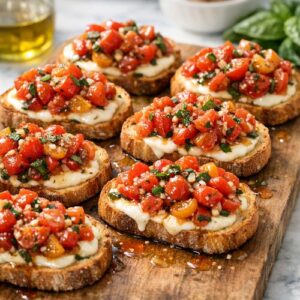
- Tear your bocconcini or fresh mozzarella into bite-sized pieces—roughly ½-inch chunks—and scatter them over the tomato topping. The warmth from the bread will slightly soften the mozzarella, creating pockets of creaminess. The contrast between the cool cheese and warm bread is part of the magic here. Distribute the mozzarella evenly so each piece of bruschetta gets a fair share. You should have enough to cover each slice with 3-4 mozzarella pieces.
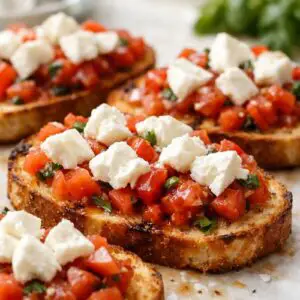
- Drizzle each bruschetta with just a whisper more of your best extra virgin olive oil—this final drizzle is where you can really showcase a premium oil if you have one. The oil should glisten on the surface, adding richness and helping to bring all the flavors together. Finish with a tiny pinch of fleur de sel or another finishing salt and freshly ground black pepper if desired. The salt crystals on top add a textural pop and emphasize the salinity of the tomato. Serve immediately. This cannot be overstated. Bruschetta with mozzarella is best eaten within 2-3 minutes of assembly, while the bread is still crispy and the mozzarella is still holding its shape. This is finger food that demands to be eaten hot and fresh.

Nutrition
Notes
Tried this recipe?
Let us know how it was!FAQs
Can I make bruschetta with mozzarella ahead of time?
You can make components ahead, but not the finished bruschetta. The tomato mixture actually benefits from resting for 2-4 hours in the refrigerator, as the flavors meld and deepen. The bread can be toasted up to 6 hours ahead and stored in an airtight container. However, once you assemble the bruschetta by adding toppings to the bread, you need to eat it within a few minutes—certainly no more than 5 minutes. The bread will begin absorbing moisture and lose its essential crispiness. For entertaining, I recommend preparing the tomato mixture and toasting the bread ahead, then assembling just before your guests arrive.
Why does my bruschetta get soggy?
Sogginess happens when you assemble bruschetta too far ahead or add too much of the tomato’s liquid to the bread. The moisture from the tomato gradually absorbs into the bread, making it mushy. The solution is simple: assemble no more than 3-4 minutes before serving. Additionally, you can reduce the amount of liquid you spoon onto the bread—use mostly the tomato pieces and drizzle only a small amount of the accumulated juices on top. Letting your tomato mixture rest with salt for 5-10 minutes before assembly also helps, because the salt draws out excess moisture that would otherwise soak the bread.
What type of mozzarella is best for this recipe?
Bocconcini (small mozzarella balls) are traditional and ideal because they’re small enough to serve whole or tear easily into pieces. Fresh mozzarella di bufala is luxurious and offers incredible creaminess. Regular whole milk mozzarella (often called “fresh mozzarella” in supermarkets) works perfectly well. Avoid pre-shredded mozzarella—it won’t have the right texture. Look for mozzarella that’s been made within the last day or two if possible, and that smells sweet and milky, never sour. It should be soft and yielding at room temperature.
Can I grill or toast the bread differently?
Absolutely. A grill pan or outdoor grill creates beautiful char marks and can be even more impressive than a broiler. Toast the bread for 1-2 minutes per side until grill marks appear and the bread is crispy. A regular toaster works if you have no other option, but you won’t get as much surface browning. An oven set to 425°F with the bread on a baking sheet takes about 5-7 minutes and works reliably. The key is achieving a crispy, golden exterior while maintaining some chew in the interior.
How many bruschetta should I plan per person?
As an appetizer at a gathering with multiple options, plan for 2-3 pieces per person. If you’re serving bruschetta as the main starter course with nothing else before a meal, plan for 3-4 pieces per person. This recipe makes 16 pieces, so it serves 4-6 people comfortably as an appetizer. For a cocktail party with many small bites, one piece per person might be appropriate. I always make slightly more than I think I’ll need—people inevitably ask for seconds, and it’s better to have extra than to run short.
More Recipes You’ll Love
- BLT Wraps With Secret Sauce Recipe – A fresh take on a classic, perfect for those who love the flavors of tomato, basil, and bright sauces.
- Avocado Caesar Salad – Pairs beautifully alongside bruschetta for a fresh, light meal with contrasting textures.
There you have it—everything you need to create bruschetta with mozzarella that tastes like you spent hours in an Italian kitchen when really, you spent less than 15 minutes. This recipe is a beautiful reminder that some of the most elegant, delicious food comes not from complicated technique, but from deep respect for quality ingredients and understanding their individual strengths.
The next time you’re entertaining, or even just craving something that feels both comforting and sophisticated, return to this recipe. Taste your tomatoes first. Use the best olive oil you can find. Let your basil come to room temperature. And remember that bruschetta isn’t really about the cooking—it’s about the assembly of beautiful things into something greater than the sum of its parts.
Enjoy!