
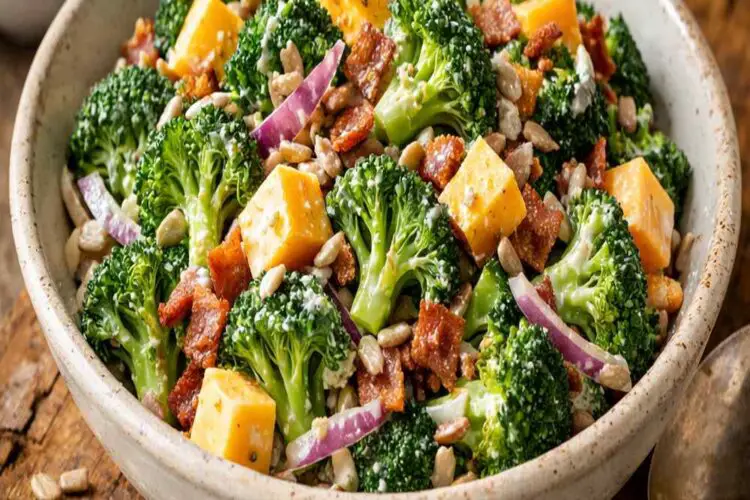
This vibrant broccoli and cheese salad is my go-to dish when I need something that tastes indulgent yet keeps things light and refreshing. Whether you’re hosting a summer barbecue or bringing a side to a potluck, this recipe delivers bold, satisfying flavors with a perfect textural contrast. For meatier main courses, I love pairing this alongside hearty proteins like Asian Beef Recipe or Asian Beef and Vegetables for a complete meal.
How My Multicultural Kitchen Created This Classic Salad
I still remember my grandmother’s kitchen in the early mornings—the smell of fresh vegetables being prepped, the gentle clink of wooden spoons against cast iron. She came from a background where every ingredient had to earn its place on the table, where nothing was wasted, and where bold flavors were celebrated. When broccoli and cheese salad started appearing at American family gatherings in my neighborhood, I watched how it brought people together. But I knew I could take it further, infusing it with the same respect for quality ingredients my grandmother taught me.
That first time I made this recipe, I wasn’t just combining ingredients—I was honoring a cooking philosophy that flavor and substance should never be compromised. The creamy dressing, the bright pop of cranberries, the smoky depth of bacon—it’s a symphony of textures and tastes that feels both comforting and exciting.
What Is Broccoli and Cheese Salad Recipe?
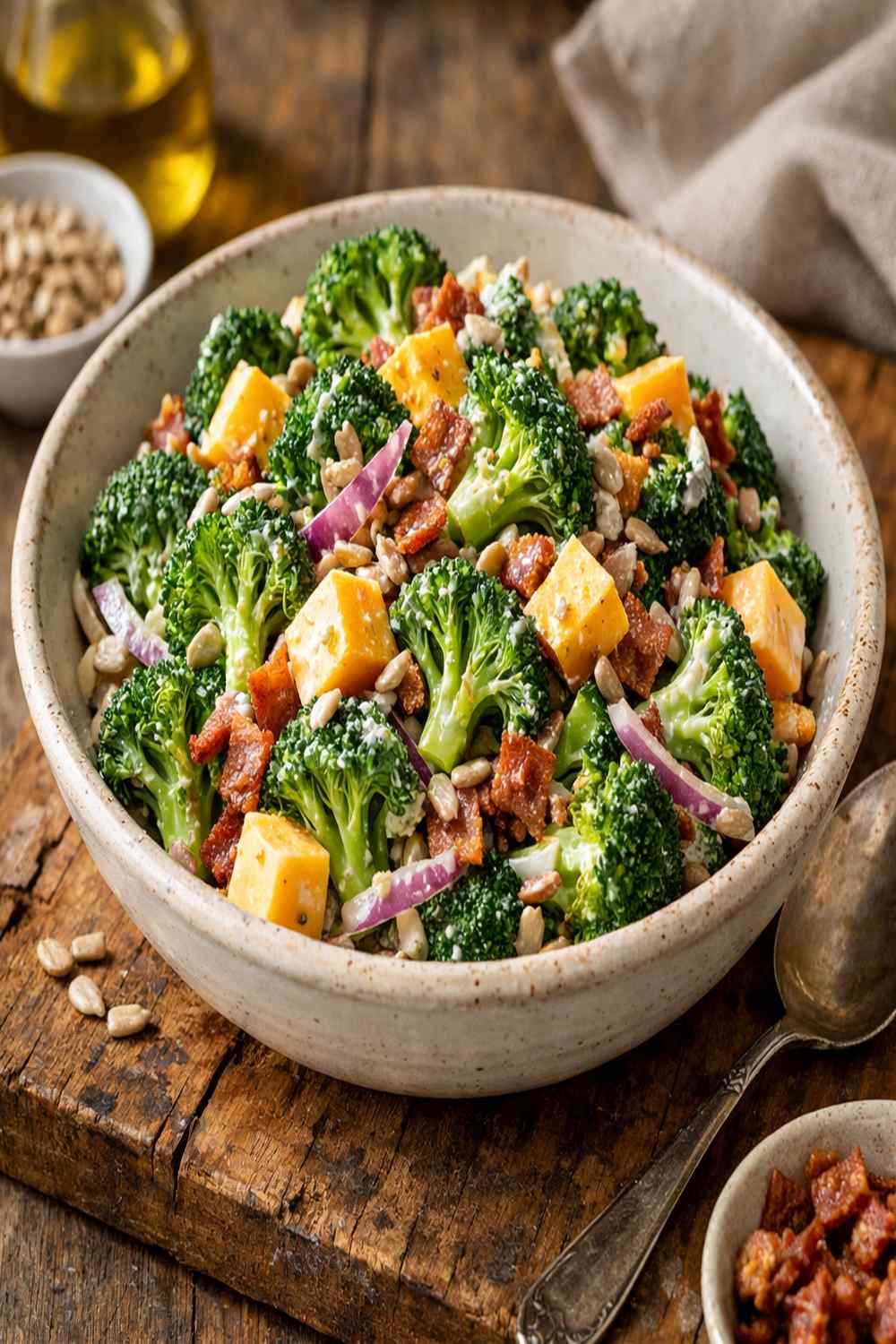
Broccoli and cheese salad is a beloved American side dish that’s evolved far beyond its original form. Born from church potlucks and family picnics in the 1980s, this salad has become a staple because it perfectly bridges the gap between vegetable nutrition and indulgent satisfaction.
What makes this version special is the balance we achieve. Rather than drowning fresh broccoli in heavy mayo, we’re creating a dressing that clings to each floret while leaving room for you to taste the vegetable itself. The sharp cheddar doesn’t overpower—it complements. The bacon and sunflower seeds aren’t just toppings; they’re crucial components that add richness, crunch, and umami depth that keeps people reaching for seconds.
The secret lies in understanding how each ingredient works on a culinary level. The acidic white wine vinegar cuts through the richness of the mayo and sour cream. The sugar balances that acidity and brings out the natural sweetness of the cranberries. The salt and pepper amplify every other flavor note. This isn’t just a collection of ingredients—it’s a carefully orchestrated flavor profile that respects both nutrition and indulgence.
Why You’ll Love This Broccoli and Cheese Salad Recipe
- Make-ahead friendly – This salad actually tastes better after it’s been refrigerated for a few hours. The flavors meld, the broccoli softens just slightly, and the whole dish becomes more cohesive. You can prepare it the night before a gathering without any stress.
- Naturally crowd-pleasing – From kids to grandparents, this salad appeals to nearly everyone. It’s not trying to be trendy or difficult—it’s simply delicious comfort food that happens to be filled with vegetables.
- Impressive nutritional profile – Raw broccoli provides sulforaphane, a powerful compound with anti-inflammatory properties. Paired with the protein from cheese and bacon, plus the heart-healthy fats from sunflower seeds, you’re creating something genuinely nourishing.
- Minimal active cooking time – No roasting, no boiling, no complicated techniques. Everything comes together in approximately 15 minutes of actual work. This is real food for real life.
- Endlessly adaptable – While the base recipe is perfect, you can easily swap ingredients based on what you have available or your personal preferences without losing the integrity of the dish.
The Ingredients
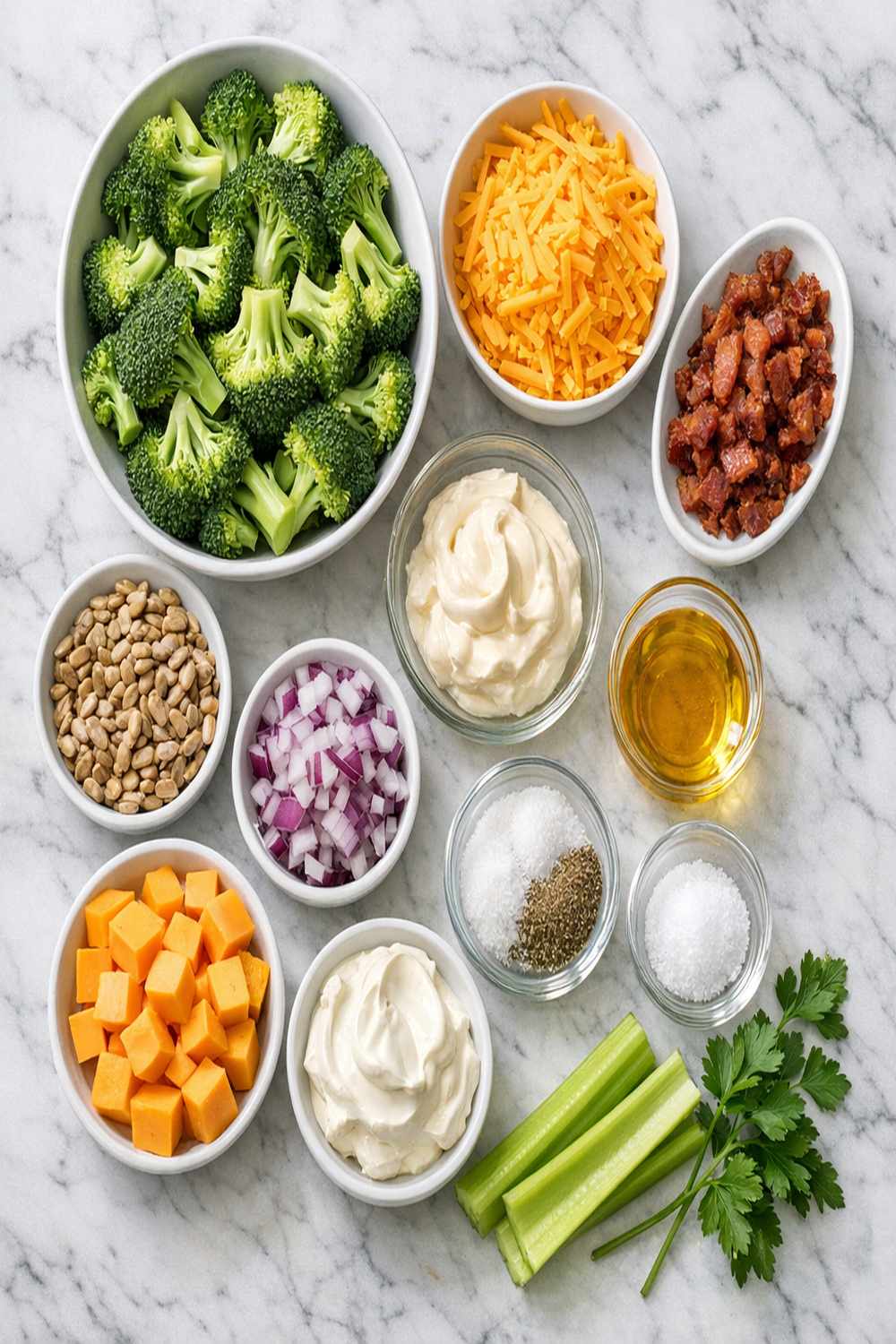
Here’s what we’re working with for this recipe. I’ve chosen each ingredient specifically for flavor, texture, and how they interact with one another. The beauty of this salad is that quality matters—your finished dish will taste directly proportional to the quality of ingredients you select. Makes approximately 8-10 servings as a side dish.
- ¾ cup unsweetened dried cranberries (tart variety works beautifully, about 90 grams)
- ½ cup crispy bacon pieces (cooked until deeply browned, about 60 grams)
- 3 tablespoons granulated sugar (about 40 grams, don’t skip this balance element)
- ½ cup roasted and salted sunflower seeds (provides essential crunch and healthy fats, about 60 grams)
- ¼ teaspoon freshly cracked black pepper
- 1 cup sharp aged cheddar cheese (cut into small chunks or thick shreds, never pre-shredded for best texture and flavor)
- 1½ tablespoons white wine vinegar (this specific acid is crucial for balance)
- ¼ teaspoon kosher salt (adjust to taste depending on bacon saltiness)
- ¼ cup finely minced red onion (adds sharp bite without overpowering, about 40 grams)
- 6 cups fresh broccoli florets (approximately 1 pound or 450 grams, about 2 to 2½ medium heads, cut into bite-sized pieces)
- ¼ cup full-fat sour cream (adds tang and richness, about 70 grams)
- 1 tablespoon fresh lemon juice (adds brightness and a subtle citrus note)
- ¾ cup high-quality mayonnaise (olive oil-based varieties are less heavy, about 175 grams)
How to Make Broccoli and Cheese Salad Recipe?
This recipe comes together beautifully when we work methodically. There’s no complicated cooking involved, but there are specific reasons we approach each step the way we do. The key is giving yourself time for flavors to marry—that’s where the real magic happens. Let’s walk through this together.
Step 1: Prepare Your Fresh Broccoli With Purpose
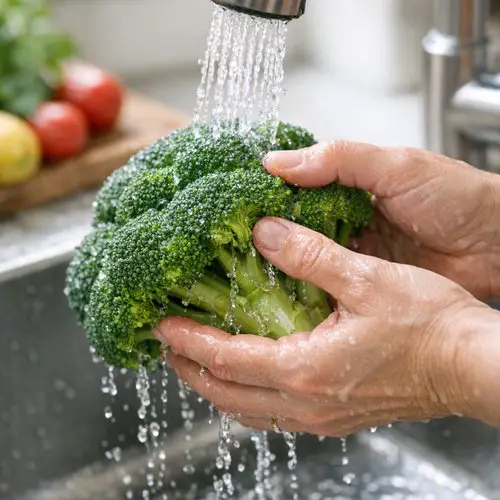
Start by washing your broccoli heads thoroughly under cool running water, gently rubbing the florets with your fingers to remove any hidden dirt or debris. Pat them completely dry with paper towels or a clean kitchen cloth—this is important because excess moisture will dilute your dressing and make the salad watery.
Now, begin cutting your broccoli into bite-sized florets, approximately 1½ inches across. Here’s the professional tip I learned from my travels through Mediterranean kitchens: don’t waste that broccoli stem! Peel away the tough outer layer with a vegetable peeler to reveal the tender, slightly sweet interior. Slice these stems into ¼-inch thick coins and include them in your salad. The stems have a wonderful texture that differs from the florets and add another dimension of interest.
Place all your prepared broccoli pieces into a very large mixing bowl. You want plenty of room to work with—crowding the bowl makes mixing difficult later.
Step 2: Combine Your Textural Elements
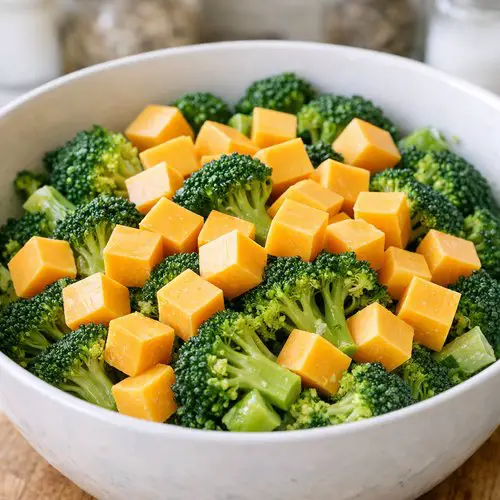
To your broccoli, add your chunks of sharp cheddar cheese. I specifically recommend cutting block cheese rather than using pre-shredded varieties because block cheese contains anti-caking agents that slightly coat each strand, preventing optimal flavor distribution. By cutting thick, irregular chunks, you’re also creating more surface area for the creamy dressing to coat.
Now add your tart dried cranberries. As you toss this mixture, you’ll notice the bright red cranberries scatter throughout, creating beautiful visual contrast. Add your crispy bacon pieces—they should be cooked until deeply browned but not burnt, as burnt bacon becomes bitter and unpleasant. Break larger pieces into small shards rather than leaving them chunky.
Finally, add your roasted and salted sunflower seeds and your minced red onion. The red onion should be cut very finely so you get a sharp bite in every forkful without overwhelming individual bites. At this point, give everything a gentle toss just to distribute the components evenly.
Step 3: Create the Dressing with Scientific Precision
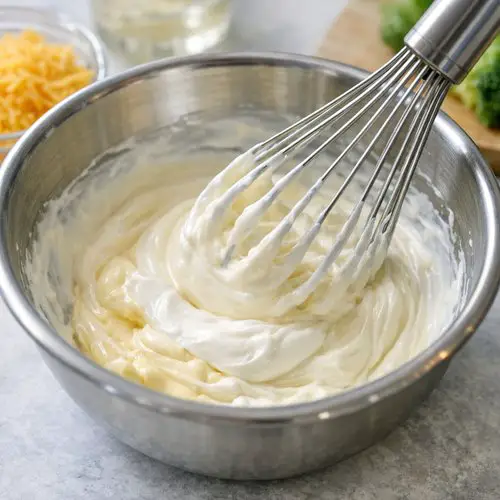
Pour your mayonnaise and sour cream into a medium-sized mixing bowl. Using a whisk, combine these two creamy bases with smooth, deliberate strokes. The sour cream is crucial here—it adds tang and prevents the dressing from becoming cloying, while also thinning it to the perfect consistency. If you used only mayo, the dressing would be too heavy and would coat your vegetables unevenly.
Add your white wine vinegar and fresh lemon juice to this creamy base. The vinegar and lemon create an acidic backbone that brightens the entire salad. As you whisk, you’ll see the dressing become slightly thinner and more luminous. This is exactly what you want.
Sprinkle in your sugar, salt, and pepper. Here’s something crucial that most people don’t understand: sugar in vinaigrette isn’t about making things sweet. It’s about balance. The sugar balances the acidity of the vinegar and lemon, allowing your palate to perceive the other flavors more clearly. It’s like a flavor amplifier. Whisk everything together until completely smooth, approximately 30 seconds of whisking. You’re looking for a unified, creamy consistency with no visible streaks or lumps.
Step 4: Bring Everything Together
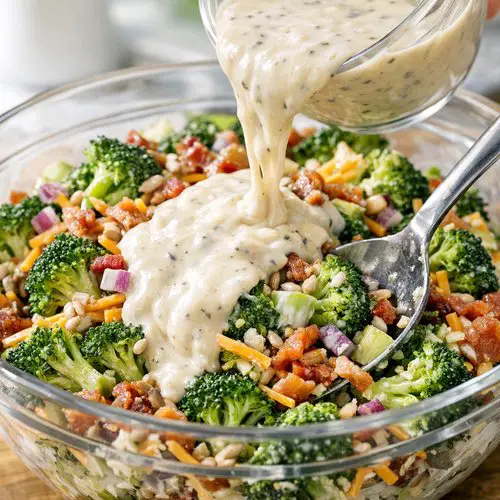
Pour your completed dressing over the broccoli mixture in the large bowl. Using a large spoon or silicone spatula, begin gently but thoroughly tossing the salad. You want every piece of broccoli to become coated with the creamy dressing. This usually takes about 1-2 minutes of consistent tossing. Don’t rush this step—the dressing needs time to coat everything properly.
The salad should look creamy and glossy when you’re finished, with the dressing clinging to the broccoli florets rather than pooling at the bottom of the bowl. If it seems too thick, you can whisk in an additional tablespoon of sour cream. If it seems too thin, let it rest for 10 minutes—the ingredients will release moisture and thicken the overall mixture.
Step 5: Refrigerate for Flavor Development
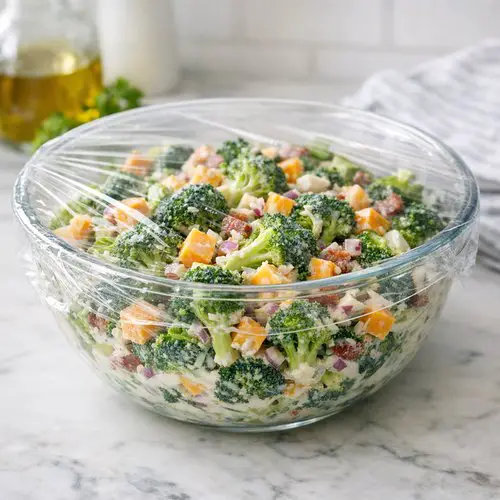
Cover your bowl with plastic wrap or transfer the salad to an airtight container and refrigerate for at least 1 hour, but ideally 3-4 hours. During this resting period, something magical happens. The broccoli absorbs the dressing gradually, becoming more flavorful. The sugar dissolves completely, the vinegar mellows, and all the components come into perfect harmony.
The cranberries will soften slightly and release their tartness throughout the salad. The cheese will become slightly softer and more integrated with the dressing. When you remove the salad from the refrigerator, give it another quick toss before serving to redistribute the dressing one final time.
Expert’s Nutritional Tip
Here’s something most recipes won’t tell you: the raw broccoli in this salad contains sulforaphane, a compound that’s actually enhanced when broccoli is eaten raw rather than cooked. Sulforaphane has been studied extensively by the USDA and shows promising anti-inflammatory properties. However, here’s the key: the compound only forms when the broccoli’s cell walls are damaged (like when you chop it). Let the chopped broccoli sit for about 5 minutes before mixing with the dressing—this allows the enzyme myrosinase to work with glucoraphanin to create maximum sulforaphane. It’s a small step that significantly increases the nutritional benefit of your salad.
Tips and Tricks
- Use block cheese exclusively – Pre-shredded cheese contains cellulose and anti-caking agents that prevent proper adhesion to the dressing. When you cut your own thick shreds or chunks, you get pure cheese flavor and better texture integration.
- Don’t skip the lemon juice – While the recipe calls for white wine vinegar, adding a tablespoon of fresh lemon juice creates additional brightness that makes the whole salad feel more alive and less heavy. This is a trick I learned from Moroccan cuisine where acid is used to awaken flavors.
- Make your own bacon if possible – Store-bought pre-cooked bacon often contains preservatives and tastes metallic. If you have the time, bake strips of bacon in the oven at 400°F for 12-15 minutes. It’s more consistent and tastes dramatically better.
- Taste as you go – Before serving, take a bite and adjust seasoning. Some bacon is saltier than others, so you might need to reduce the salt slightly. The dressing should taste slightly more seasoned than you prefer in a spoon form—when it coats the broccoli, the flavor becomes more subtle.
- Keep components separate until serving if making more than 8 hours ahead – If you need to make this salad more than 8 hours in advance, keep the broccoli and dressing separate, combining them just before serving. This prevents the broccoli from becoming too soft.
Common Mistakes to Avoid
- Over-mixing the dressing – Whisking too vigorously can cause the mayo to separate or become grainy. Gentle, deliberate whisking for 30 seconds is all you need. You’re not making whipped cream; you’re simply combining creamy ingredients.
- Using pre-shredded cheese – I mentioned this in tips, but it bears repeating. The coating on pre-shredded cheese prevents it from melting and integrating smoothly into the dressing. The texture difference is noticeable and disappointing.
- Cutting broccoli pieces too large – Large florets don’t coat evenly with dressing and create awkward bites. Keep florets to approximately the size of a ping-pong ball or slightly smaller.
- Skipping the resting period – I know you’re eager to eat it, but serving immediately means the broccoli hasn’t absorbed the dressing yet. The flavors haven’t melded. Give it time. The wait makes an enormous difference.
Make-Ahead Guide
For up to 2 days ahead: Prepare the complete salad (mixed together with dressing) and store in an airtight container in the refrigerator. Toss thoroughly before serving. The salad may release some liquid, but this is normal and can be stirred back in.
For 3-4 days ahead: Prepare all components separately. Store chopped broccoli in a container with a damp paper towel, cooked bacon in an airtight container, cheese and cranberries in separate containers, and dressing in a jar. Assemble 1-2 hours before serving. This method prevents the broccoli from becoming overly soft.
Freezing is not recommended – The broccoli becomes mushy when frozen, and the texture contrast that makes this salad special is lost.
Seasonal Variations
- Spring variation: Replace dried cranberries with fresh green grapes (halved), and add ¼ cup of fresh mint leaves. The freshness perfectly captures spring flavors while maintaining the salad’s structure.
- Summer variation: Add ½ cup of fresh corn kernels and replace half the cranberries with diced fresh strawberries. The sweetness of summer fruit takes this in a lighter direction while keeping the core structure intact.
- Fall variation: Use dried cherries or dried apricots instead of cranberries, add ¼ cup of candied pecans, and switch from red onion to thinly sliced shallots. Increase the sugar in the dressing to 4 tablespoons for deeper sweetness.
- Winter variation: Add roasted Brussels sprout leaves (toss with oil and roast until crispy before adding), dried cranberries with a pinch of cinnamon, and use aged sharp cheddar. This creates a heartier, warmer version perfect for holiday tables.
Can I Store Broccoli and Cheese Salad Recipe?
This salad is actually one of the better candidates for storage. Keep it in an airtight container in the refrigerator where it will maintain quality for up to 3 days. The dressing continues to meld with the vegetables, and surprisingly, the salad often tastes even better on day two than it does immediately after mixing.
After 24 hours, you may notice the broccoli has softened slightly and released some moisture. This is completely normal and desirable—it means the vegetables have absorbed the flavors of the dressing. If you prefer crunchier broccoli, store the components separately and combine just before serving.
Before serving after refrigeration, give the salad a thorough toss. The dressing may have settled, and tossing redistributes it evenly. You can add a tablespoon of sour cream if the salad seems to have dried out slightly during storage.
For potlucks or events, transport the salad in the airtight container and keep it chilled until serving time. If serving outdoors in warm weather, place the container over a bowl filled with ice.
Nutrition Information
Based on USDA nutritional data per serving (approximately 1 cup, calculated for 8 servings), this broccoli and cheese salad contains approximately 285 calories, 24 grams of fat, 12 grams of protein, and 15 grams of carbohydrates (including 8 grams of fiber). The salad is an excellent source of vitamin C from the raw broccoli and provides calcium from both the cheese and the broccoli.
The nutritional profile is genuinely balanced. The protein comes from cheese, bacon, and sunflower seeds. The healthy fats from sunflower seeds and olive oil-based mayonnaise provide satiety. The carbohydrates are primarily from the vegetables and dried fruit, providing natural fiber. This isn’t a diet salad trying to be something it’s not—it’s an indulgent side dish that happens to be genuinely nutritious.
For those tracking specific nutrients: one serving provides approximately 180mg of calcium (14% of daily value), 35mg of vitamin C (58% of daily value), and 3 grams of dietary fiber (12% of daily value).
What Can I Serve With Broccoli and Cheese Salad Recipe?
This versatile salad works beautifully alongside virtually any protein-centered main course. The cool, creamy nature of this salad makes it an ideal counterpoint to warm, salty, or heavily spiced dishes. I particularly love serving it alongside grilled proteins, barbecued meats, or roasted chicken. When you’re building a complete meal, pair this with something that contrasts both in temperature and flavor intensity.
For a cohesive menu with cream sauces, consider serving this salad with Alfredo Parmesan Chicken or a dish featuring Alfredo Sauce Made With Cream Cheese. The broccoli salad adds brightness to rich, creamy mains.
- Grilled proteins – Chicken breasts, steak, salmon, or grilled pork chops all benefit from the cool, creamy contrast. The acidity in the salad’s dressing cuts through the richness of grilled fat.
- Barbecued meats – Pulled pork, brisket, or ribs pair wonderfully. The slight sweetness of the cranberries and sugar in the dressing echoes barbecue sauce notes while providing textural contrast.
- Roasted chicken – A simple herb-roasted chicken and this salad create a complete, satisfying meal without being overly heavy.
- Sandwich accompaniment – Serve alongside turkey, beef, or chicken sandwiches as a crunchy, flavorful side that won’t overshadow the main event.
- Potluck staple – This salad travels well and serves beautifully at room temperature, making it perfect for outdoor gatherings, picnics, and family reunions.
Substitutes
- Greek yogurt instead of sour cream – Use ¼ cup of full-fat Greek yogurt in place of sour cream. This increases protein content and creates a slightly tangier dressing. Whisk well to avoid lumps.
- Avocado oil mayo instead of traditional mayo – If olive oil mayo isn’t available, avocado oil-based mayo creates a lighter dressing with different flavor notes. Use the same amount.
- Different dried fruits – Dried cherries, dried apricots, dried blueberries, or dried raisins work beautifully. Each brings different sweetness levels and flavor profiles. Adjust quantities based on how sweet you prefer the salad.
- Different nuts and seeds – Chopped pecans, sliced almonds, or pumpkin seeds can replace sunflower seeds. Toast them first for maximum flavor. Use the same measurement.
- Different cheese varieties – White cheddar, aged gouda, or gruyère each bring unique flavor notes. Avoid very soft cheeses like brie or fresh mozzarella, which don’t hold their shape in the dressing.
- Apple cider vinegar instead of white wine vinegar – This creates a slightly warmer, earthier flavor profile. Use the same measurement, though apple cider vinegar is slightly more assertive, so taste as you go.
- Candied pecans instead of bacon – For vegetarians or a different flavor direction, candied pecans provide crunch, sweetness, and richness without the smoky pork element. Use ½ cup chopped candied pecans.

Broccoli And Cheese Salad Recipe
Ingredients
Method
- Start by washing your broccoli heads thoroughly under cool running water, gently rubbing the florets with your fingers to remove any hidden dirt or debris. Pat them completely dry with paper towels or a clean kitchen cloth—this is important because excess moisture will dilute your dressing and make the salad watery. Now, begin cutting your broccoli into bite-sized florets, approximately 1½ inches across. Here's the professional tip I learned from my travels through Mediterranean kitchens: don't waste that broccoli stem! Peel away the tough outer layer with a vegetable peeler to reveal the tender, slightly sweet interior. Slice these stems into ¼-inch thick coins and include them in your salad. The stems have a wonderful texture that differs from the florets and add another dimension of interest. Place all your prepared broccoli pieces into a very large mixing bowl. You want plenty of room to work with—crowding the bowl makes mixing difficult later.

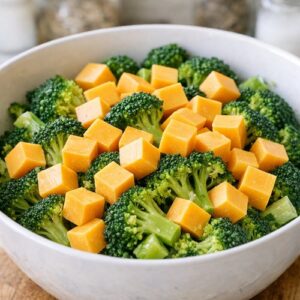
- To your broccoli, add your chunks of sharp cheddar cheese. I specifically recommend cutting block cheese rather than using pre-shredded varieties because block cheese contains anti-caking agents that slightly coat each strand, preventing optimal flavor distribution. By cutting thick, irregular chunks, you're also creating more surface area for the creamy dressing to coat. Now add your tart dried cranberries. As you toss this mixture, you'll notice the bright red cranberries scatter throughout, creating beautiful visual contrast. Add your crispy bacon pieces—they should be cooked until deeply browned but not burnt, as burnt bacon becomes bitter and unpleasant. Break larger pieces into small shards rather than leaving them chunky. Finally, add your roasted and salted sunflower seeds and your minced red onion. The red onion should be cut very finely so you get a sharp bite in every forkful without overwhelming individual bites. At this point, give everything a gentle toss just to distribute the components evenly.
- Pour your mayonnaise and sour cream into a medium-sized mixing bowl. Using a whisk, combine these two creamy bases with smooth, deliberate strokes. The sour cream is crucial here—it adds tang and prevents the dressing from becoming cloying, while also thinning it to the perfect consistency. If you used only mayo, the dressing would be too heavy and would coat your vegetables unevenly. Add your white wine vinegar and fresh lemon juice to this creamy base. The vinegar and lemon create an acidic backbone that brightens the entire salad. As you whisk, you'll see the dressing become slightly thinner and more luminous. This is exactly what you want. Sprinkle in your sugar, salt, and pepper. Here's something crucial that most people don't understand: sugar in vinaigrette isn't about making things sweet. It's about balance. The sugar balances the acidity of the vinegar and lemon, allowing your palate to perceive the other flavors more clearly. It's like a flavor amplifier. Whisk everything together until completely smooth, approximately 30 seconds of whisking. You're looking for a unified, creamy consistency with no visible streaks or lumps.

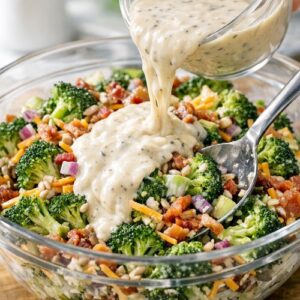
- Pour your completed dressing over the broccoli mixture in the large bowl. Using a large spoon or silicone spatula, begin gently but thoroughly tossing the salad. You want every piece of broccoli to become coated with the creamy dressing. This usually takes about 1-2 minutes of consistent tossing. Don't rush this step—the dressing needs time to coat everything properly. The salad should look creamy and glossy when you're finished, with the dressing clinging to the broccoli florets rather than pooling at the bottom of the bowl. If it seems too thick, you can whisk in an additional tablespoon of sour cream. If it seems too thin, let it rest for 10 minutes—the ingredients will release moisture and thicken the overall mixture.
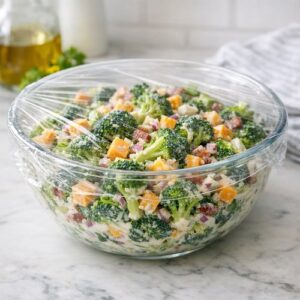
- Cover your bowl with plastic wrap or transfer the salad to an airtight container and refrigerate for at least 1 hour, but ideally 3-4 hours. During this resting period, something magical happens. The broccoli absorbs the dressing gradually, becoming more flavorful. The sugar dissolves completely, the vinegar mellows, and all the components come into perfect harmony. The cranberries will soften slightly and release their tartness throughout the salad. The cheese will become slightly softer and more integrated with the dressing. When you remove the salad from the refrigerator, give it another quick toss before serving to redistribute the dressing one final time.
Nutrition
Notes
Tried this recipe?
Let us know how it was!FAQs
Can I make this salad without mayo?
Technically yes, but it won’t be the same salad. Mayo is the foundation that creates the creamy texture and carries the flavor throughout. If you need a dairy-free or vegan version, blend equal parts coconut milk with silken tofu, add the same vinegar, lemon, sugar, salt, and pepper. The texture will be slightly different but still delicious. Alternatively, use vegan mayo combined with cashew cream for a richer result that mimics traditional mayo more closely.
Why does my broccoli salad get watery?
This happens when broccoli isn’t completely dried after washing, or when the salad sits for extended periods and the vegetables release moisture. Always pat broccoli completely dry before chopping. Additionally, if making more than 8 hours ahead, store components separately and combine just before serving. For potlucks, transport in an airtight container and don’t uncover until serving time.
Can I use frozen broccoli?
I don’t recommend frozen broccoli for this recipe because it has a different texture—softer and less crisp. When thawed, it releases excess moisture and doesn’t provide the important textural contrast that makes this salad special. Fresh broccoli is genuinely essential for the best results. If fresh broccoli isn’t available, you’d be better served making a different salad.
How far in advance can I prepare the individual components?
You can prepare all components up to 24 hours in advance. Chop broccoli and store it in a container with a damp paper towel to maintain crispness. Cook and cool bacon, then store in an airtight container. Prepare the dressing in a jar and refrigerate. Cube cheese and store in a covered container. Keep everything separate until 1-2 hours before serving, then combine and refrigerate until serving time. This ensures fresh texture and flavor.
Is this salad suitable for meal prep?
Yes, with the caveat that prepared salad is best consumed within 2-3 days. Prepare it completely and store in portion-sized containers. The salad actually tastes better after a few hours as flavors meld, but beyond 3 days the broccoli becomes overly soft and the overall freshness diminishes. For week-long meal prep, keep components separate and assemble daily portions as needed.
Can I double this recipe for a large crowd?
Absolutely! This recipe scales perfectly. Double or triple all ingredients, maintaining the same proportions. The only change: when combining such a large quantity, you may want to use two large bowls instead of one, or a very large mixing bowl (like a serving bowl). Toss thoroughly to ensure even dressing distribution. A large batch can be made the day before an event and stored in airtight containers, making it genuinely convenient for large gatherings.
More Recipes You’ll Love
- Bacon Cheddar Dip – If you love the combination of bacon, cheddar, and creamy richness, this dip captures those same delicious elements in appetizer form.
- Baby Carrots in the Oven – Another vegetable-focused side that’s roasted rather than raw, providing warming contrast to this cold salad.
- Alfredo Cream Cheese – For creamy sauce lovers, this offers similar indulgent satisfaction with versatile serving options.
There you have it—the complete guide to creating a broccoli and cheese salad that’s genuinely impressive and absolutely reliable. This recipe respects both the vegetables and your time, delivers consistent results, and creates something your family will actually request by name. The beauty is in the balance: the creamy dressing against crisp broccoli, the tartness of vinegar against subtle sweetness, the richness of cheese against the bright pop of cranberries.
Whether you’re a seasoned cook experimenting with flavor combinations or someone just looking for a reliable side dish that impresses without complexity, this salad delivers. Make it once and you’ll understand why it’s been a family favorite for generations—and why, when you taste the version you’ve created with care and quality ingredients, you’ll wonder why you haven’t been making it forever. Enjoy!