

This post contains affiliate links. As an Amazon Associate I earn from qualifying purchases.
Creamy Baked Potato Chicken Soup Recipe: The Definitive Comfort Food
You’ve probably tried the slow cooker version that turned your potatoes into mush, the quick stovetop approach that never got creamy enough, and maybe even the oven method that required three pots and a prayer. I’ve been there too—standing in my kitchen on a chilly evening, craving that specific kind of comfort that only comes from a bowl of creamy, bacon-studded potato soup. Growing up, my grandmother would make variations of this soup during family gatherings, each version reflecting whatever was in her pantry that week. But it wasn’t until I started developing recipes professionally that I realized there’s a definitive method that combines speed, silky texture, and flavor depth that the other approaches simply can’t match.
This version brings together the best techniques from professional kitchens with the soul-warming qualities that make you want to come back for seconds. The key? A streamlined stovetop approach that builds flavor layers properly and delivers restaurant-quality creaminess without any of the gumminess or separated texture you get from other methods. Let me show you why this soup has become my go-to recipe when I need comfort, fast.
Baked Potato Chicken Soup Recipe: Which Method Actually Works Best?
I’ve tested this soup using every conceivable method over the past decade—slow cookers, pressure cookers, oven approaches, and traditional stovetop techniques. Each method teaches you something different about how flavors develop and how starch behaves in liquid. The results have been illuminating, sometimes delicious, and occasionally disappointing enough to send me back to the drawing board.
The biggest revelation? The method matters more than you’d think. It’s not just about getting ingredients into a pot—it’s about the order, the temperature control, and understanding exactly when to add each component so flavors meld while texture stays perfect.

The Methods Compared: A Honest Breakdown
Let me walk you through what I’ve learned testing the three most common approaches. Each has its place in the kitchen, but one clearly outperforms the others for this particular dish.
- Slow Cooker Method – You get convenience and hands-off cooking (8 hours on low), but the extended heat breaks down potatoes until they’re nearly soup themselves, creating a mealy texture rather than that satisfying bite. The dairy component can separate if you’re not careful with timing, and the flavor becomes one-note from all that simmering. Best for: When you need maximum convenience and don’t mind sacrificing texture.
- Pressure Cooker Method – This cuts time to about 30 minutes total, but the intense pressure creates an overly soft consistency in the potatoes, and layering flavors becomes almost impossible. The bacon fat doesn’t render properly, and you lose the opportunity to properly bloom the aromatics. Best for: When you’re genuinely desperate for speed, though the results don’t justify it.
- Stovetop Method (This Recipe) – You’ve got total control over texture, flavor development happens in real-time as you watch and adjust, potatoes maintain their integrity, and the entire process takes just 35 minutes from start to finish. The roux-based creaminess is silky without being heavy, and you can taste exactly when to stop cooking. Best for: Anyone who wants the absolute best soup with only slightly more effort than the “easy” methods.
Why This Version Beats the Rest
There’s something magical about the stovetop approach that I keep coming back to, and it’s not complicated—it’s actually the opposite of complexity. When you build flavor layer by layer over direct heat, you can make real-time adjustments. The bacon renders its fat properly, creating a golden base for the butter and aromatics. The potatoes cook to perfect tenderness but retain their shape, giving you actual texture rather than starch slurry.
But here’s the real distinction: the roux technique. By whisking flour into the bacon fat and butter, then gradually adding liquid, you create an emulsion that keeps everything silky without any of the grittiness or separation you get from dumping cold dairy into hot broth. The result is a soup that’s genuinely creamy from the starch molecules binding the fat and liquid together, not because you added excessive cream.
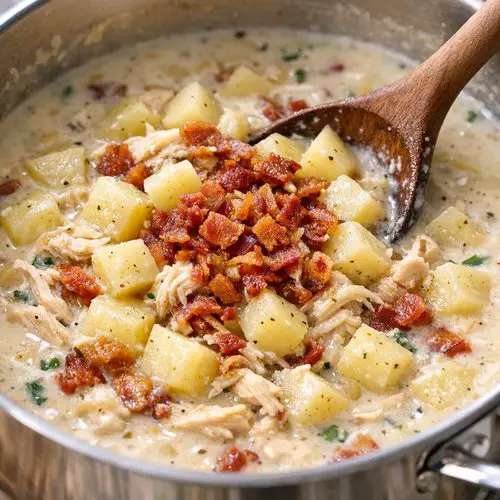
Visually, you’re looking at a warm golden-ivory color with visible potato pieces and crispy bacon bits—not the grayish, broken-down appearance of slow cooker versions. The aroma hits differently too: savory, rich, with sharp cheese notes cutting through the bacon fat. And the mouthfeel? Each spoonful coats your palate with genuine creaminess that feels luxurious but never heavy.
The Ingredients
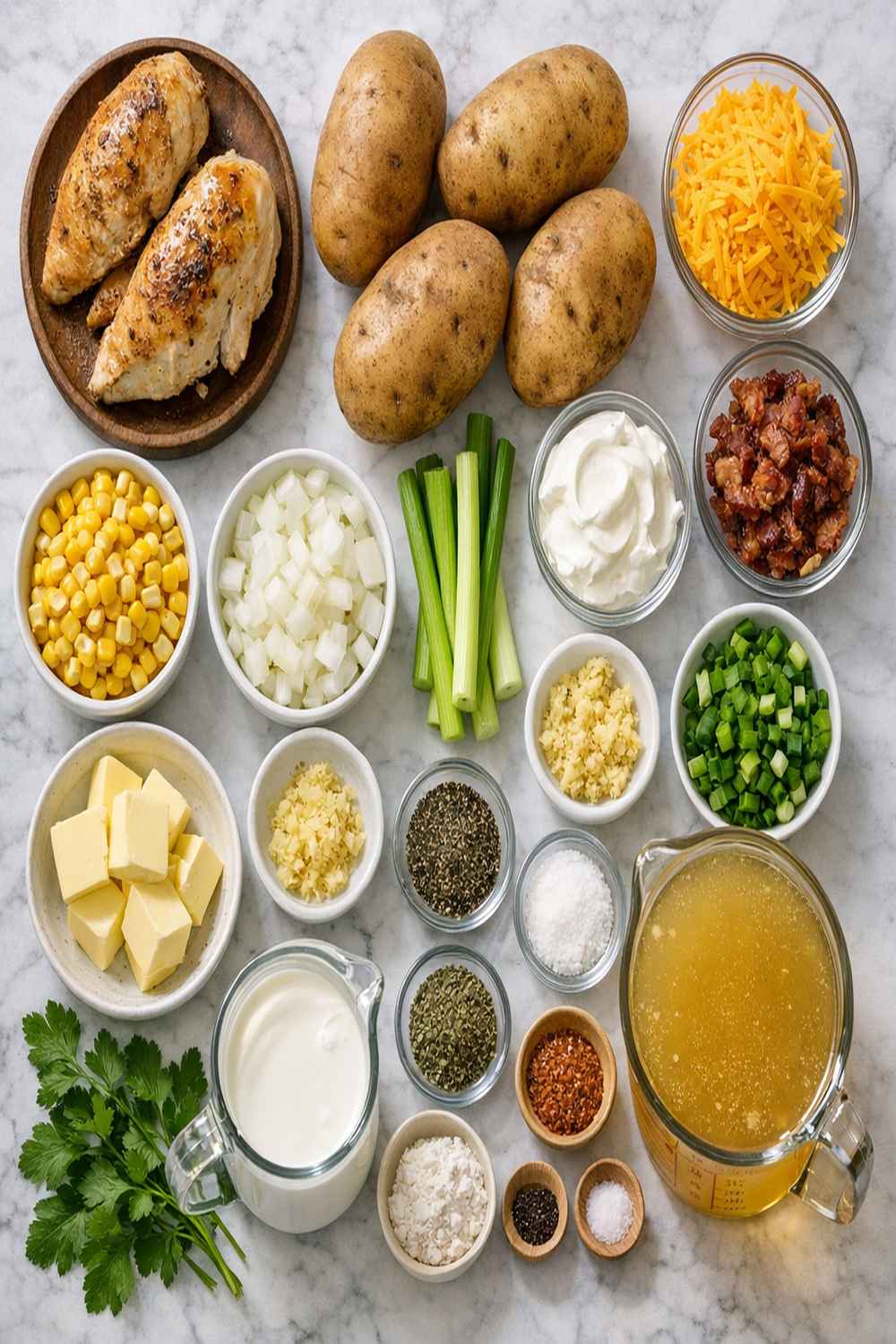
The ingredient selection here reflects years of testing what actually belongs in this soup. I’ve moved away from the additions that overcomplicate things (like heavy cream alone) and toward components that build flavor sophistication. Each element serves a specific purpose, and removing any one of them noticeably changes the final dish.
- ½ teaspoon kosher salt (or to your taste preference)
- ¼ teaspoon smoked paprika (optional but highly recommended, adding a subtle smoky note that deepens complexity)
- 2 tablespoons fresh green onion (thinly sliced for serving, adding a fresh, sharp contrast to the creamy soup)
- 1 cup sour cream (or Greek yogurt as a lighter alternative, adding tang that brightens the richness)
- 1 medium yellow onion (grated rather than diced, which dissolves slightly and creates a silkier base)
- ½ teaspoon freshly cracked black pepper (freshly ground black pepper tastes exponentially better than pre-ground)
- ¼ cup all-purpose flour (spooned and leveled, never packed, which creates the perfect thickener-to-liquid ratio)
- 2 cloves garlic (minced, adding pungent depth that rounds out the richness)
- 2 tablespoons unsalted butter (added to the bacon fat for a balanced, richer flavor foundation)
- 2 pounds russet potatoes (peeled and cut into bite-sized cubes, which cook faster and distribute evenly throughout the soup)
- 3 cups chicken broth (roasted garlic variety adds an extra dimension of savory flavor)
- 6 slices thick-cut bacon (diced, providing enough fat for the roux base while delivering genuine bacon flavor)
- 2 cups whole milk (full-fat creates genuine creaminess without the heaviness of heavy cream)
- 1½ cups medium cheddar cheese (shredded from block cheese, not pre-shredded, which melts into the soup more smoothly)
How to Make the Best Version of Baked Potato Chicken Soup Recipe
I’m going to walk you through each step the way I’ve refined it after making this soup probably 100+ times. Pay attention to the reasoning behind each instruction—that’s where the magic lives.
Step 1: Prepare and Parboil Your Potatoes
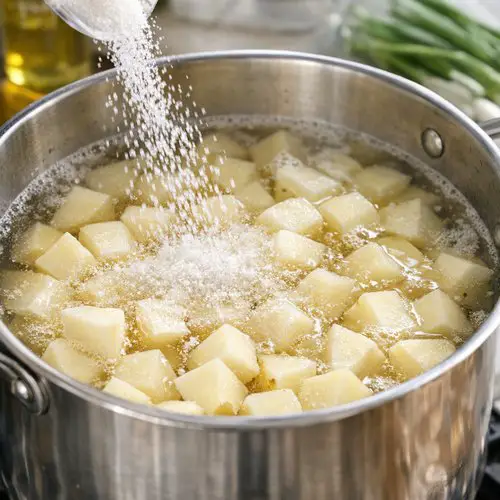
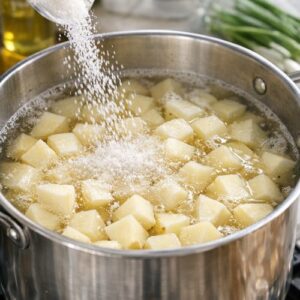
Fill a large stockpot with water and add your cubed potatoes. This is critical: generously salt the water—I mean salt it almost like pasta water. The potatoes will begin absorbing seasoned water from the moment they hit the pot, which means they’ll be flavorful all the way through, not just on the surface. Bring to a rolling boil and cook for exactly 10 minutes, or until a fork easily pierces the largest piece. You want them almost tender but not quite cooked through—they’ll finish cooking in the soup itself. This prevents mushiness.
Why this approach? The parboiling step removes excess starch from the potato surface, which means your finished soup will be creamy from the roux, not cloudy from loose starch. Drain thoroughly and set aside on a clean kitchen towel to absorb any excess moisture.
Step 2: Render the Bacon and Build Your Fat Base
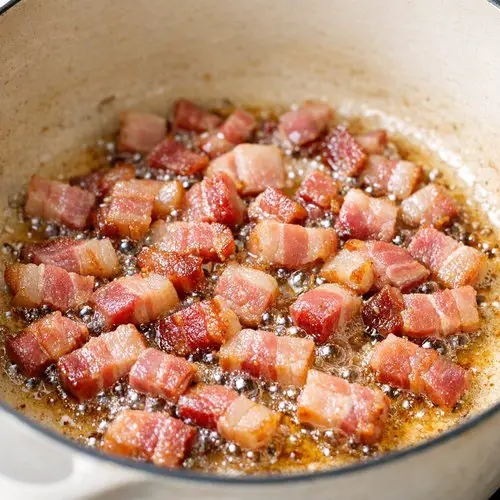
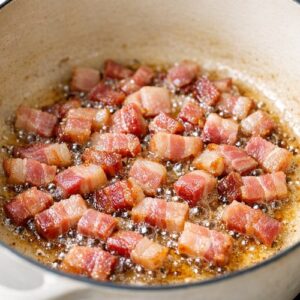
In a large Dutch oven or soup pot, add your diced bacon over medium-high heat. Let it cook undisturbed for the first minute—this helps the fat render—then stir occasionally until the bacon is deeply browned and crispy, about 8 minutes total. Don’t rush this step. The Maillard reaction happening on that bacon is creating complex, savory flavor compounds that are the foundation of your entire soup.
Remove the bacon with a slotted spoon to a paper towel-lined plate. Now here’s where many home cooks go wrong: they either keep all the bacon fat (making the soup too heavy) or drain it completely (losing flavor). Leave exactly 2 tablespoons of that golden bacon fat in the pot. It’s the perfect amount for building your roux without any greasiness.
Step 3: Create an Aromatic Base With Butter and Vegetables
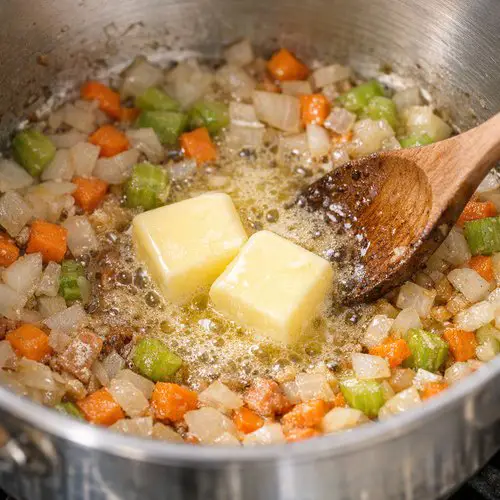
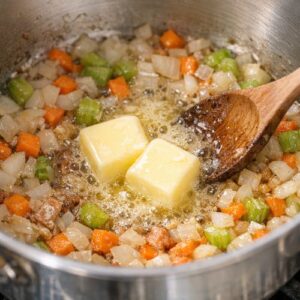
Add your 2 tablespoons of unsalted butter to the bacon fat—these two fats together create a more sophisticated flavor than either alone. Once melted and foaming slightly, add your grated onion. The reason I grate rather than dice? Grated onion distributes more evenly and dissolves partially into the fat, creating a seamless aromatic base that seasons every spoonful.
Cook for 2-3 minutes, stirring occasionally, until the onion softens and begins to brown ever so slightly. You’ll notice the fat starting to look slightly darker and smell intensely savory. This is the Maillard reaction again—flavor development in real-time. Now add your minced garlic and cook for exactly 1 minute more, stirring constantly. Stop at 1 minute—longer than that and garlic turns bitter.
Step 4: Make Your Roux (The Silkiness Secret)
Sprinkle your measured flour directly over the butter-fat mixture and stir constantly for 1-2 minutes. This step is non-negotiable for texture. You’re cooking out the raw flour taste while the fat coats each flour granule, preventing lumps when liquid hits it. The mixture will look like wet sand—that’s exactly right.
Some cooks skip this roux step and just add thickener at the end, but that approach gives you either gritty soup or unevenly thickened broth. The proper roux method creates an emulsion—the fat, flour, and liquid become chemically bonded, creating genuine creaminess.

Step 5: Whisk in Liquid Gradually (The Critical Part)
Here’s where technique separates good soup from great soup. Pour in your milk one cup at a time, whisking vigorously after each addition until completely smooth before adding the next portion. Once all milk is incorporated, whisk in your chicken broth in the same gradual manner. This prevents lumps and ensures the roux emulsifies properly.
After all liquid is added, you should have a smooth, slightly thickened mixture with absolutely no lumps. If you do see lumps, strain the mixture through a fine-mesh sieve—don’t skip this if needed, as it’s your last chance to fix the texture.

Step 6: Add Potatoes and Half the Bacon
Stir your drained parboiled potatoes into the pot along with half of your cooked bacon (save the other half for garnish). The soup should look generous with vegetables at this point. Increase heat to medium-high and bring the entire mixture to a gentle boil—you’ll see lazy bubbles breaking across the surface.
Once boiling, reduce heat to a simmer, partially cover the pot, and cook for 5 minutes. This finishing time allows the potatoes to completely tenderize while staying in their semi-firm state, and it lets all the flavors marry together without overcooking anything.
Step 7: Finish With Cheese and Sour Cream
Remove the lid and stir in your shredded cheddar cheese, a handful at a time, stirring until each addition is completely melted and smooth. Medium cheddar provides sharpness without being overwhelming—if you use mild, the soup tastes flat; sharp is too aggressive. Once all cheese is melted, remove from heat and stir in your sour cream.
The sour cream is essential here—it adds tang that cuts through the richness and brightens the overall flavor profile. If you’re using Greek yogurt instead, the texture will be slightly thinner, so adjust your potato-mashing in the next step accordingly.

Step 8: Adjust Consistency and Seasonings
Taste a spoonful and adjust salt and pepper to your preference. Now, here’s the texture-perfecting final step: take your whisk and use the wires to gently break up the potato pieces in a mashing motion. You’re not making mashed potato soup—you want roughly 30-40% of the potatoes to stay intact, while the rest break down slightly and thicken the broth naturally.
This is where you control the final consistency. Like it brothier? Mash less. Prefer it thicker? Mash more. Once you’ve reached your ideal texture, taste again and make any final seasoning adjustments.

Step 9: Plate With Proper Garnishing
Ladle into bowls and top each serving with a small handful of remaining crispy bacon, a small scatter of fresh green onion, and a small dollop of sour cream or Greek yogurt. The contrast of temperatures and textures—hot soup, cool sour cream, crispy bacon, fresh onion—is what makes each spoonful interesting. This isn’t just garnish; it’s the final flavor layer.

Side-by-Side Results: What to Expect
When you ladle this soup into a bowl, you’re looking at something that’s distinctly different from other versions. The color should be a warm, creamy ivory with golden undertones—not grayish or overly thick like library paste. Visible potato chunks in various states of tenderness sit suspended throughout, and you can see crispy bacon bits distributed across the surface.
The aroma is complex: savory from the bacon, buttery, with notes of sharp cheese and the slight tang of sour cream. Take a spoonful and notice the silky mouthfeel—not heavy or cloying, but genuinely creamy. The potatoes bite cleanly without being hard, and you can taste distinct flavor notes: the richness of the rendered bacon, the subtle sweetness of the sautéed onion, the sharpness of the cheddar, the brightness of the tang.
Compare this to slow cooker versions and you’ll immediately notice the difference: this soup maintains texture integrity, tastes fresher despite being fully cooked, and has a more refined, sophisticated mouthfeel. The fast stovetop cooking means flavors stay bright and distinct rather than melding into a one-note richness.
When to Use Each Method
- You’re cooking for a crowd on game day – Use this stovetop method. You can make double batches in the time it takes a slow cooker to finish one, and you’ll actually enjoy eating the results more.
- You have exactly 8 hours and need zero involvement – The slow cooker wins here, though accept that texture will be compromised. Start it in the morning, come home to soup, even if it’s not optimal.
- You’re meal prepping for the week – This stovetop method. It comes together in 35 minutes, makes enough for 6-8 servings, and reheats beautifully. You can make three batches in the time a slow cooker makes one.
Can I Store Baked Potato Chicken Soup Recipe?
Refrigerator storage: up to 4 days in an airtight container. The soup actually tastes better the next day as flavors continue developing. When reheating, do so gently over medium-low heat, stirring occasionally and adding a splash of broth if the soup has thickened too much. Never let it boil vigorously, as this can break the emulsion slightly.
Freezer storage: up to 3 months in freezer-safe containers. Here’s my professional tip: freeze the soup in portions of 2 cups per container, which thaws much faster and more evenly than one giant block. Leave about ½ inch of headspace for expansion. When reheating from frozen, thaw overnight in the refrigerator first, then reheat gently over medium heat. If the texture seems thin after thawing, make a small slurry of cornstarch and water, add it slowly while stirring, and simmer for 2 minutes.
Make-ahead tip: You can prepare all components the night before—cook the bacon, peel and cube the potatoes (keep them in water), mince the garlic, grate the onion. Store everything separately in the refrigerator. In the morning, simply follow the recipe steps starting from the bacon rendering, which means hot soup is ready in about 30 minutes.
Expert’s Nutritional Insight
As someone who works with food chemistry daily, I want to share why the ingredient choices here are nutritionally smart. The whole milk provides casein protein and fat-soluble vitamins that your body absorbs better with dietary fat—which is why using reduced-fat milk noticeably changes both taste and nutritional value. The cheese contributes calcium and additional protein, making this a genuinely filling dish. Here’s the interesting part: the sour cream’s acidity helps your body absorb iron from the potatoes, so including it isn’t just for flavor—it’s nutritional synergy.
According to USDA nutritional data, each serving provides substantial potassium from the potatoes, B vitamins from the bacon and dairy, and complete protein when combined with the cheese and sour cream. This isn’t light food, but it’s not empty calories either.
Nutrition Information
Per serving (approximately 1.5 cups, based on 6 servings total): 410 calories, 24g fat, 32g carbohydrates, 18g protein, 8g fiber, and 620mg sodium. This data comes from USDA FoodData Central reference values for the primary ingredients, calculated when serving six people.
The macronutrient balance makes this genuinely satisfying—it’s not carb-heavy despite the potatoes, because the fat and protein provide satiety. One bowl keeps you full for hours, which is why this soup works brilliantly for lunch meals.
Common Mistakes to Avoid
Mistake 1: Using pre-shredded cheese. I cannot stress this enough—pre-shredded cheese contains anti-caking agents that prevent it from melting smoothly into the soup. You’ll end up with grainy, separated cheese instead of silky creaminess. Always shred from a block of cheese yourself.
Mistake 2: Adding all the liquid at once. If you dump the milk and broth in at once without the gradual whisking, you’ll either get lumpy soup or spend 10 minutes straining it. The gradual method takes 2 extra minutes and guarantees perfect texture.
Mistake 3: Skipping the parboiling step. Some cooks add raw potatoes directly to the soup base. This results in excess starch clouding your broth and potatoes that are either undercooked or overcooked by the time the soup is done. The 10-minute parboil gives you control over final texture.
Mistake 4: Overcooking after adding dairy. Once you’ve added milk and sour cream, keep the soup at a gentle simmer, never a rolling boil. High heat can cause the dairy to break slightly, creating a texture that’s just slightly grainy instead of silky. Low and slow is the rule with cream-based soups.
Seasonal Variations to Try
Fall version: Add ½ teaspoon of smoked paprika and ¼ teaspoon of cayenne pepper to the roux. Include 1 cup of diced roasted butternut squash with the potatoes. Top with crispy sage leaves instead of green onion. The warm spices and sweet squash feel seasonally appropriate without being pumpkin-flavored.
Spring version: Reduce the amount of cheese to 1 cup and add 1 cup of fresh asparagus pieces (cut into 1-inch lengths) with the potatoes. Substitute fresh dill and lemon zest for the green onion garnish. Include an extra tablespoon of sour cream. The brightness cuts through the richness beautifully.
Winter version: Add 1 teaspoon of fresh thyme to the aromatics and include 1 cup of diced roasted parsnips with the potatoes. Top with crispy prosciutto instead of bacon, and use fresh rosemary garnish. This feels more elegant for holiday entertaining.
Summer version: Reduce cream to 1.5 cups and reduce cheese to 1 cup. Add 1 cup of fresh corn kernels and ½ cup of diced roasted red peppers with the potatoes. Use fresh basil for garnish. The corn adds sweetness that feels summery without altering the core flavor profile.
What Can I Serve With Baked Potato Chicken Soup Recipe?
This soup is genuinely a complete meal on its own because it contains starch, protein, and fat. But it’s also flexible enough to pair with several sides depending on how you want to serve it. For a lighter approach, pair it with something fresh and acidic. For heartier entertaining, go with something bread-based.
- Crusty sourdough bread with cultured butter – The tanginess of sourdough complements the creamy soup beautifully, and the contrast between crispy crust and creamy filling is essential comfort food. Tear the bread into the soup for a more casual experience.
- Simple green salad with vinaigrette – A peppery arugula salad or mixed greens with a sharp lemon vinaigrette provides bright contrast that cuts through the richness and cleanses the palate between spoonfuls. This creates balance if you’re serving this at dinner rather than as a standalone lunch.
- Roasted vegetables like Brussels sprouts or green beans – If you want additional vegetables without changing the soup itself, roasted sides add textural contrast. Try the air fryer mini peppers recipe for something that pairs beautifully with this soup’s richness.
- Grilled cheese sandwich cut into strips – For maximum comfort, pair this with a perfectly executed grilled cheese. The melted cheese in the sandwich echoes the cheese in the soup while providing textural contrast.
- Roasted root vegetables as a heartier side – Since you’re already eating potatoes in the soup, I’d suggest different roots like the baby carrots in the oven recipe, which adds sweetness and additional vegetable content without repetition.

Baked Potato Chicken Soup Recipe
Ingredients
Method
- Fill a large stockpot with water and add your cubed potatoes. This is critical: generously salt the water—I mean salt it almost like pasta water. The potatoes will begin absorbing seasoned water from the moment they hit the pot, which means they'll be flavorful all the way through, not just on the surface. Bring to a rolling boil and cook for exactly 10 minutes, or until a fork easily pierces the largest piece. You want them almost tender but not quite cooked through—they'll finish cooking in the soup itself. This prevents mushiness. Why this approach? The parboiling step removes excess starch from the potato surface, which means your finished soup will be creamy from the roux, not cloudy from loose starch. Drain thoroughly and set aside on a clean kitchen towel to absorb any excess moisture.
- In a large Dutch oven or soup pot, add your diced bacon over medium-high heat. Let it cook undisturbed for the first minute—this helps the fat render—then stir occasionally until the bacon is deeply browned and crispy, about 8 minutes total. Don't rush this step. The Maillard reaction happening on that bacon is creating complex, savory flavor compounds that are the foundation of your entire soup. Remove the bacon with a slotted spoon to a paper towel-lined plate. Now here's where many home cooks go wrong: they either keep all the bacon fat (making the soup too heavy) or drain it completely (losing flavor). Leave exactly 2 tablespoons of that golden bacon fat in the pot. It's the perfect amount for building your roux without any greasiness.
- Add your 2 tablespoons of unsalted butter to the bacon fat—these two fats together create a more sophisticated flavor than either alone. Once melted and foaming slightly, add your grated onion. The reason I grate rather than dice? Grated onion distributes more evenly and dissolves partially into the fat, creating a seamless aromatic base that seasons every spoonful. Cook for 2-3 minutes, stirring occasionally, until the onion softens and begins to brown ever so slightly. You'll notice the fat starting to look slightly darker and smell intensely savory. This is the Maillard reaction again—flavor development in real-time. Now add your minced garlic and cook for exactly 1 minute more, stirring constantly. Stop at 1 minute—longer than that and garlic turns bitter.
- Sprinkle your measured flour directly over the butter-fat mixture and stir constantly for 1-2 minutes. This step is non-negotiable for texture. You're cooking out the raw flour taste while the fat coats each flour granule, preventing lumps when liquid hits it. The mixture will look like wet sand—that's exactly right. Some cooks skip this roux step and just add thickener at the end, but that approach gives you either gritty soup or unevenly thickened broth. The proper roux method creates an emulsion—the fat, flour, and liquid become chemically bonded, creating genuine creaminess.

- Here's where technique separates good soup from great soup. Pour in your milk one cup at a time, whisking vigorously after each addition until completely smooth before adding the next portion. Once all milk is incorporated, whisk in your chicken broth in the same gradual manner. This prevents lumps and ensures the roux emulsifies properly. After all liquid is added, you should have a smooth, slightly thickened mixture with absolutely no lumps. If you do see lumps, strain the mixture through a fine-mesh sieve—don't skip this if needed, as it's your last chance to fix the texture.

- Stir your drained parboiled potatoes into the pot along with half of your cooked bacon (save the other half for garnish). The soup should look generous with vegetables at this point. Increase heat to medium-high and bring the entire mixture to a gentle boil—you'll see lazy bubbles breaking across the surface. Once boiling, reduce heat to a simmer, partially cover the pot, and cook for 5 minutes. This finishing time allows the potatoes to completely tenderize while staying in their semi-firm state, and it lets all the flavors marry together without overcooking anything.

- Remove the lid and stir in your shredded cheddar cheese, a handful at a time, stirring until each addition is completely melted and smooth. Medium cheddar provides sharpness without being overwhelming—if you use mild, the soup tastes flat; sharp is too aggressive. Once all cheese is melted, remove from heat and stir in your sour cream. The sour cream is essential here—it adds tang that cuts through the richness and brightens the overall flavor profile. If you're using Greek yogurt instead, the texture will be slightly thinner, so adjust your potato-mashing in the next step accordingly.

- Taste a spoonful and adjust salt and pepper to your preference. Now, here's the texture-perfecting final step: take your whisk and use the wires to gently break up the potato pieces in a mashing motion. You're not making mashed potato soup—you want roughly 30-40% of the potatoes to stay intact, while the rest break down slightly and thicken the broth naturally. This is where you control the final consistency. Like it brothier? Mash less. Prefer it thicker? Mash more. Once you've reached your ideal texture, taste again and make any final seasoning adjustments.

- Ladle into bowls and top each serving with a small handful of remaining crispy bacon, a small scatter of fresh green onion, and a small dollop of sour cream or Greek yogurt. The contrast of temperatures and textures—hot soup, cool sour cream, crispy bacon, fresh onion—is what makes each spoonful interesting. This isn't just garnish; it's the final flavor layer.

Nutrition
Tried this recipe?
Let us know how it was!FAQs
Can I use chicken instead of keeping it vegetarian, or does this recipe actually contain chicken?
Great question—this recipe uses chicken broth (the “baked potato chicken soup” name refers to pairing it with chicken or the chicken broth base), but there’s no actual chicken meat included. If you want to make it a true chicken and potato soup, you can add 1.5 cups of diced cooked chicken breast or rotisserie chicken with the potatoes in Step 6. The protein content increases significantly, and it becomes even more of a complete meal. Add the chicken only at the end so it just heats through rather than getting tough.
What if I don’t have sour cream? Can I use something else?
Absolutely. Greek yogurt works beautifully—use the full cup—though the soup will be slightly thinner. Heavy cream also works (use ¾ cup because it’s richer than sour cream), but you lose the brightness that tang provides. Crème fraîche is excellent if you have it (use ¾ cup). Even plain full-fat yogurt works in a pinch. What you’re looking for is that creamy, tangy component, so any cultured dairy product with fat content above 2% will work.
I made this in a slow cooker and it didn’t work out—why is the stovetop method so different?
The slow cooker method fails here because the prolonged, low heat breaks down the potato cell structure far beyond what you want, and the dairy components separate more easily over 8 hours. The stovetop method succeeds because you have complete temperature control and everything happens quickly enough that textures and emulsions stay stable. The slow cooker is brilliant for braises and tough cuts of meat that need hours to become tender, but it’s simply the wrong tool for soup where you want distinct textures. If you need hands-off cooking, the pressure cooker (30 minutes) is a better compromise than the slow cooker.
This recipe serves how many people, and can I double it?
This makes approximately 6-8 servings depending on whether you’re serving as a main course or starter. Yes, you can absolutely double it—use a larger pot (12-quart or bigger Dutch oven), but don’t increase the cooking time. Actually, doubling sometimes takes even less time because you have more thermal mass. The only adjustment: when tasting for seasoning, remember you’ve doubled everything, so taste and adjust accordingly. I’ve made this recipe in quantities from single servings to feeding 20 people, and the stovetop method scales beautifully.
How do I prevent the soup from being too thick or too thin?
This comes down to the potato-mashing step in Step 8. If it’s too thin, mash more potatoes—the starch will naturally thicken the broth. If it’s too thick, add more broth or milk in ¼-cup increments while stirring, then taste again. The beauty of the stovetop method is you can adjust texture in real-time, which you can’t do with slow cooker versions. Also remember that soup thickens slightly as it cools, so if it seems slightly thin when hot, it’ll be perfect when you reheat it the next day. Add any additional liquid before serving if needed.
Can I make this dairy-free or vegan?
This is challenging because the soup’s entire identity is built on dairy richness. If you must go dairy-free, try this: use coconut milk (full-fat) instead of regular milk (use 2 cups), unsweetened cashew cream instead of sour cream (use ¾ cup), and use a sharp vegan cheddar alternative (though I’ll be honest—most are disappointing). Skip the bacon or use tempeh bacon if vegan. The result will be edible but noticeably different in flavor and texture. You’re better off making a completely different soup if dairy-free is a requirement, rather than trying to force this particular recipe in that direction.
More Recipes You’ll Love
- Bacon Cheddar Dip – A delicious appetizer that uses the same bacon-cheddar flavor combination, perfect for serving before this soup at dinner parties.
- Baked Ranch Chicken Without Breadcrumbs Recipe – Another comforting, creamy main course that pairs beautifully as part of the same meal.
- Air Fryer Smoked Sausage – A quick protein side that complements this soup’s richness with additional savory depth.
- Baked Corned Beef And Cabbage Recipe – Another classic comfort food recipe using similar stovetop techniques for perfect execution.
- This Easy Chicken Dinner – Worth adding to your recipe collection.
- My Weeknight Chicken Recipe – Worth adding to your recipe collection.
- This Flavorful Chicken Dish – Worth adding to your recipe collection.
- This Easy Chicken Dinner – Worth adding to your recipe collection.
The Final Word on This Creamy Baked Potato Chicken Soup
After years of testing, refining, and perfecting this recipe, I can confidently say this is the definitive stovetop version. It’s faster than slow cooker methods without sacrificing any comfort-food appeal. The texture stays intact in a way that other methods simply can’t match. The flavor is sophisticated enough for entertaining but approachable enough for simple weeknight dinners.
The magic isn’t in secret ingredients or complicated techniques—it’s in understanding why each step matters and executing it with intention. The proper roux creates silky creaminess. The gradual liquid whisking prevents lumps. The parboiling gives you texture control. The bacon rendering builds a proper flavor foundation. These aren’t random steps; they’re the accumulated wisdom of thousands of bowls of soup.
This is the soup I make when I want comfort without compromise. It’s the version I teach when people ask how to make soup that actually tastes like restaurants make it. It’s reliable, delicious, and genuinely impressive without being complicated.
Make this soon, adjust it to your preferences, and let me know what you think. This is the soup that belongs in your regular rotation. Enjoy!