This post contains affiliate links. As an Amazon Associate I earn from qualifying purchases.
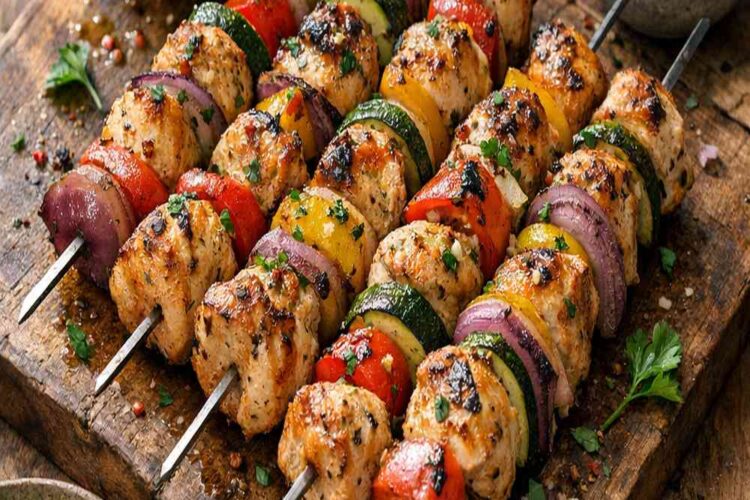
You know that incredible chicken kabob dish from your favorite Mediterranean or Middle Eastern restaurant? The one where tender, juicy chicken is threaded onto skewers with perfectly charred onions, and that mysterious yogurt-based marinade keeps you coming back week after week? Here’s the secret to making it at home—and honestly, making it better. I’ve reverse-engineered this beloved classic, and we’re about to crack the code together with a foolproof method that delivers restaurant-quality results in your own kitchen. Whether you’re planning a casual weeknight dinner or impressing guests at a summer gathering, this copycat version rivals anything you’ll order out, without the premium price tag or the compromise on fresh ingredients.
Copycat Chicken Kabobs In Oven Recipe: My Mission to Recreate Perfection
I became absolutely obsessed with a specific version of these kabobs during a family trip through Istanbul when I was sixteen. My grandmother took me to a small family-run restaurant tucked into a narrow side street, where the owner was grilling skewers over an open flame in the window. The chicken was impossibly tender, the marinade was complex and aromatic—warm spices layered beneath bright citrus—and there was this unmistakable tang I couldn’t quite place. For years, I tried to recreate that exact experience, ordering from restaurants whenever I could afford it, trying different recipes, testing variables endlessly.
Then one day, it clicked. The tang? Greek yogurt. The warm spices? A careful balance of paprika, cumin, and just a whisper of cinnamon. The bright notes? Fresh lemon juice and zest. Once I understood the foundational elements, I could start manipulating them—testing marinating times, cooking temperatures, skewer arrangements—until I developed a version that didn’t just match the restaurant original but surpassed it with the freshness only homemade cooking provides.
What Makes the Restaurant Version So Good?
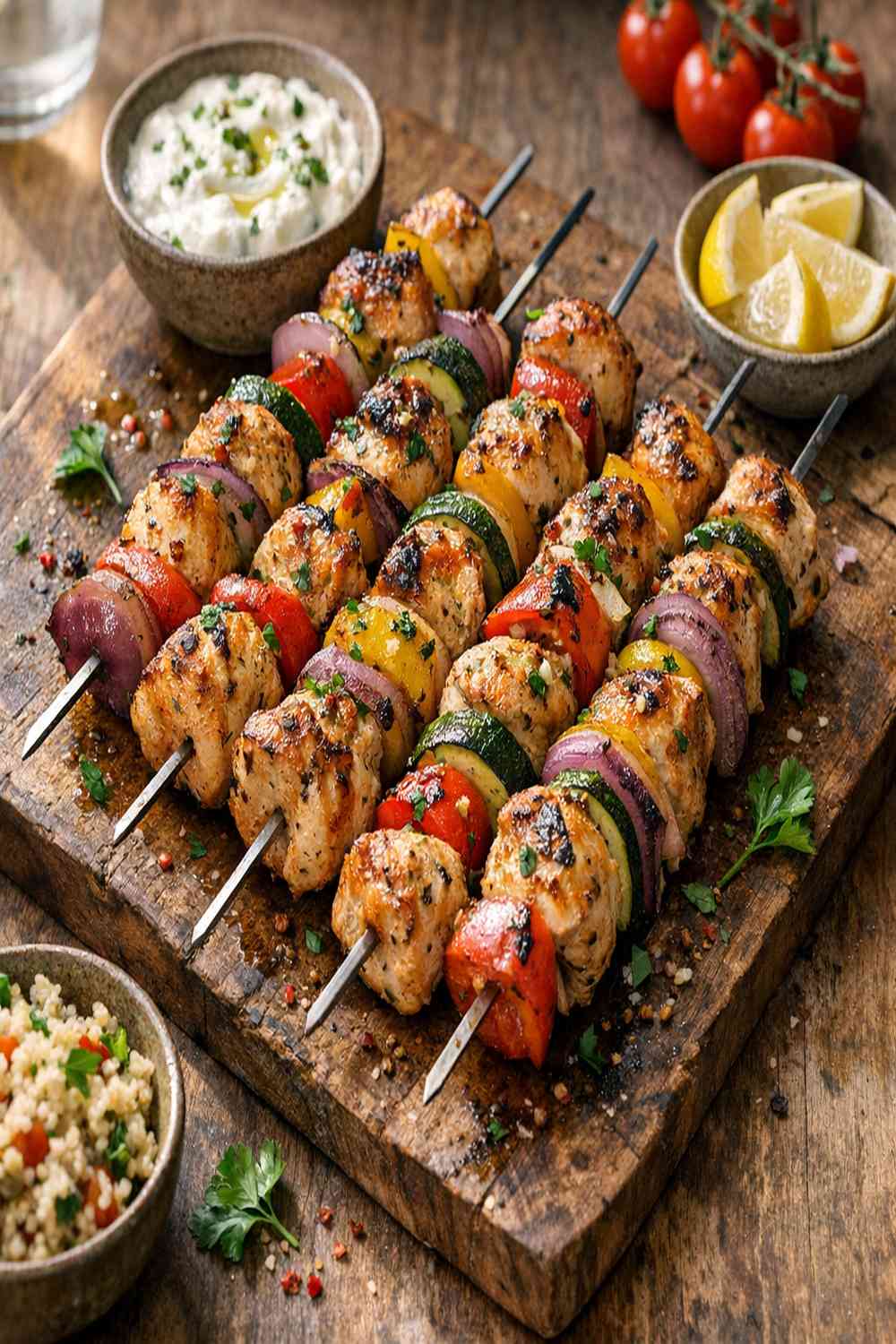
Restaurant chicken kabobs work their magic through a combination of technique, ingredient quality, and flavor layering that seems deceptively simple. When you break down what makes these skewers so addictive, you discover several professional elements that we can absolutely replicate at home.
The first secret is the yogurt-based marinade—specifically, the use of full-fat Greek yogurt which contains enzymes that tenderize the chicken while the acid gently cooks the outer proteins, creating a silky texture. The second is overnight marinating, which allows those flavors to deeply penetrate the meat rather than sitting on the surface. Third is careful spice balancing—the warm spices (paprika, cumin, cinnamon) are measured precisely so none overpowers the others, creating a harmonious flavor profile rather than a one-note heat. Finally, there’s the high-heat cooking method that creates golden-brown exteriors while keeping interiors juicy, achieved through proper skewer spacing and intentional turning.
- The yogurt marinade base – activates meat enzymes for unmatched tenderness while adding subtle tang
- The spice blend proportion – warm spices work in concert, creating depth without overwhelming heat
- Overnight marinating time – allows flavor penetration deep into the chicken, not just the surface
- The char-and-moisture balance – high heat creates crust while interior stays succulent
How This Homemade Version Compares
Let’s be honest about the trade-offs. Restaurant versions have industrial equipment—commercial grills that reach consistent, intense temperatures—and they can source whole, premium chickens butchered in-house. However, our homemade version wins in critical areas. You control ingredient freshness; your lemon juice is squeezed minutes before use, not from concentrate. You choose your chicken quality and can trim exactly how much fat you want. You can customize heat levels (reducing the red pepper flakes if your family prefers milder flavors) and experiment with additional herbs or aromatics that a chain restaurant can’t accommodate.
The cost difference is substantial. A restaurant serving of chicken kabobs typically runs $16-$24 before tax and tip, whereas homemade costs roughly $6-$8 per serving. More importantly, you’re making enough for 6-8 servings in one session, which means you’re investing an hour of active prep time for multiple meals. The flavor quality is genuinely comparable to restaurant versions, and the texture of properly marinated, oven-roasted chicken is tender and juicy—sometimes even better than grilled versions because the yogurt marinade prevents the exterior from drying out under high, direct heat.
The Ingredients—Reverse-Engineered for Success
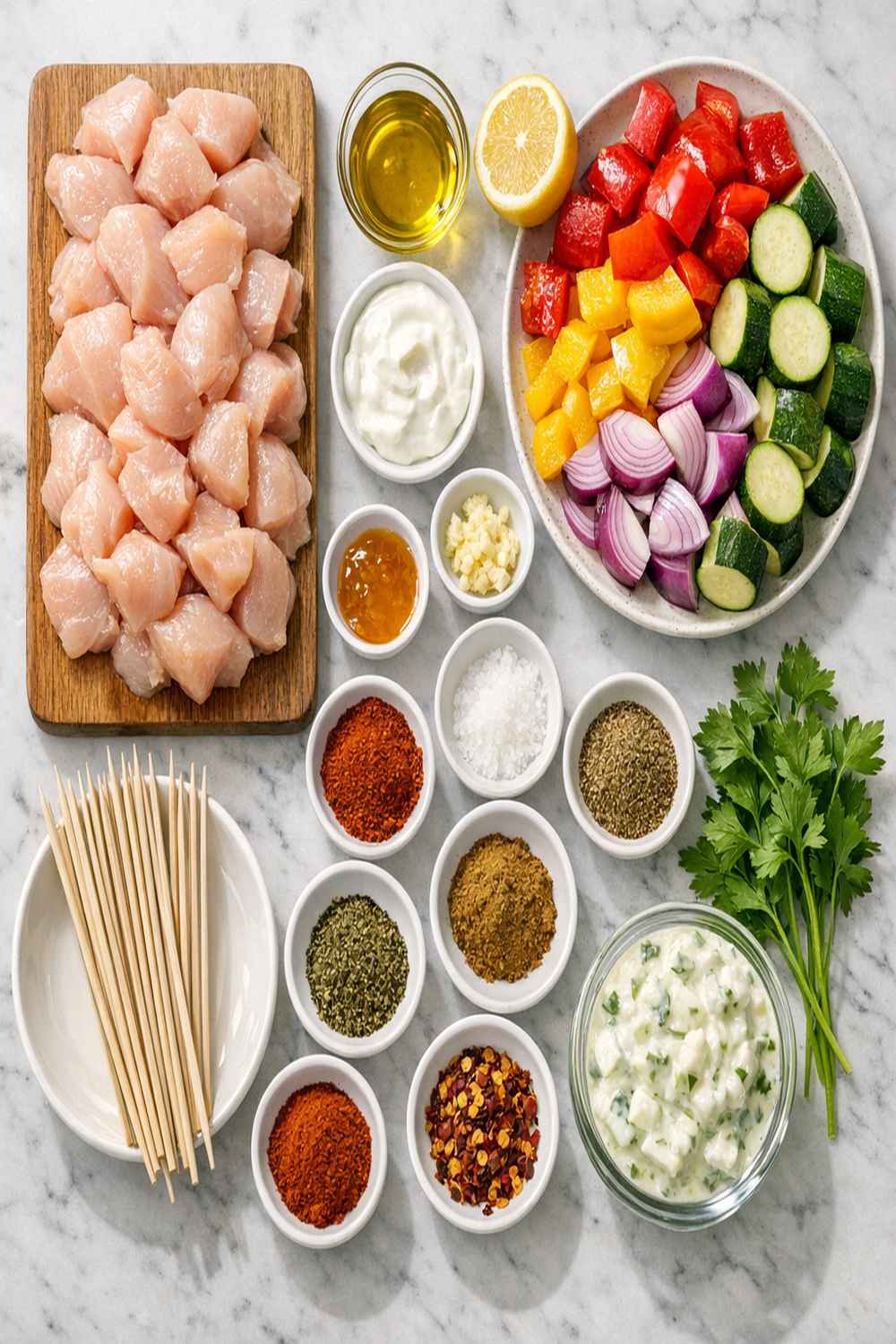
Each ingredient in this recipe serves a specific purpose, identified through careful testing and comparison to restaurant versions. I’ve grouped these strategically to help you understand how the marinade works as a cohesive system. The marinade itself is built in layers—dairy for tenderizing and richness, acid for brightness and enzymatic action, fat for flavor delivery, spices for warmth and complexity, and aromatics for depth.
For the Marinade Base
- 2 tablespoons extra-virgin olive oil (adds fat-soluble flavor and helps distribute spice oils throughout)
- 2 tablespoons freshly squeezed lemon juice (from approximately one medium lemon; provides acid for flavor and enzyme activation)
- 1 cup plain whole milk Greek yogurt (full-fat is essential; it creates the signature creamy marinade and tenderizing effect)
- 5 cloves garlic, minced (releases sulfur compounds when cut, creating savory depth)
- Zest of one lemon (adds bright, fragrant top notes without additional acid)
For the Spice Blend
- ½ teaspoon freshly ground black pepper (adds subtle heat and complexity)
- 1 teaspoon crushed red pepper flakes (adjust to ½ teaspoon if you prefer milder heat; adds lingering warmth)
- 1¾ teaspoons kosher salt (essential for flavor development and moisture retention in the chicken)
- 2 teaspoons paprika (provides warm, slightly sweet pepper flavor and color; use a good quality Spanish or Hungarian variety)
- ½ teaspoon ground cumin (adds earthy, slightly nutty undertones that ground the warm spices)
- ⅛ teaspoon ground cinnamon (a whisper amount that adds warmth and complexity without being detectable as “cinnamon”)
For Assembly and Cooking
- 1 large red onion, cut into 1-inch chunks (adds sweetness when caramelized and a subtle crunch that contrasts with tender chicken)
- Metal skewers, 6-8 total (allow proper spacing between pieces for even cooking)
- Vegetable oil for greasing the baking sheet (prevents sticking and creates even browning)
- 2½ to 3 pounds boneless, skinless chicken thighs, trimmed of excess fat and cut into 1½-inch pieces (thighs stay juicier than breasts due to higher fat content; these pieces are large enough to stay moist but small enough to cook through evenly)
Makes: 6-8 kabobs, serving 4-6 people depending on appetite and side dishes
The Copycat Method: How to Recreate Chicken Kabobs In Oven Recipe at Home
We’re about to crack this delicious code by building the marinade strategically, then using a combination of overnight marinating and high-heat oven cooking to achieve that restaurant magic. The beauty of this method is that it’s actually simpler than grilling—you’ll have more control over the final result, and you won’t need to worry about flare-ups or uneven heat distribution.
Step 1: Build Your Aromatic Marinade Base
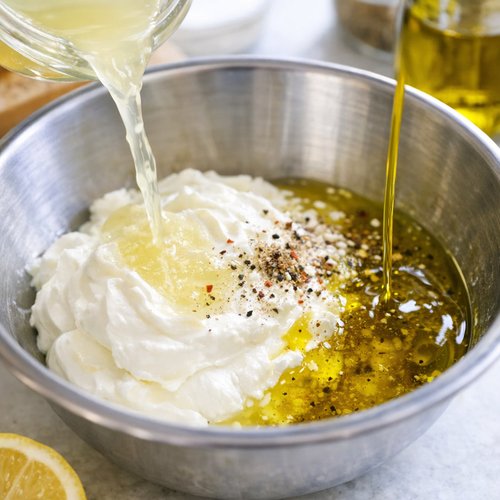
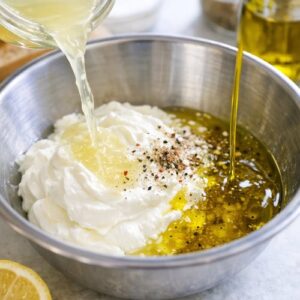
In a medium mixing bowl, combine your Greek yogurt with the freshly squeezed lemon juice and olive oil. This is where the temperature of your yogurt matters—if it’s straight from the refrigerator, it’s thick and dense. We want to whisk these three ingredients together until the mixture becomes smooth and slightly thinner, creating a silky base that will coat the chicken evenly. The whisking action physically breaks down the yogurt’s structure slightly while incorporating air, which helps the marinade penetrate more effectively.
Next, add your minced garlic, lemon zest, and all the spices: paprika, cumin, cinnamon, red pepper flakes, salt, and black pepper. Whisk thoroughly for about two minutes, making sure the spices are fully incorporated and there are no clumps. The key here is that you want the red pepper flakes to be distributed evenly throughout—if they clump together, you’ll bite into pockets of intense heat. The marinade should smell incredibly aromatic at this point, with distinct notes of lemon, warm spices, and garlic.
Step 2: Prepare Your Chicken with Precision
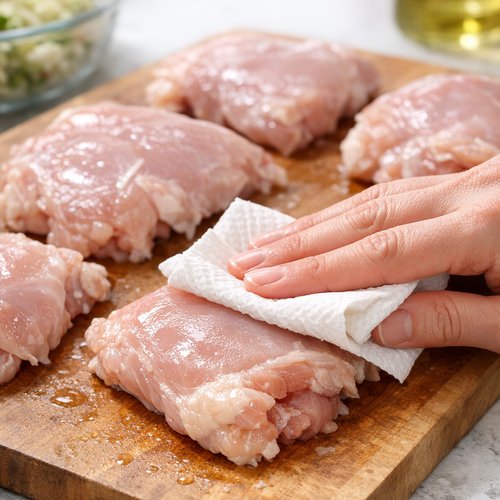
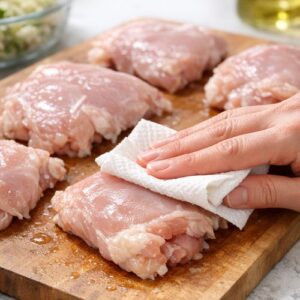
Pat your chicken thighs dry with paper towels. This step, which many home cooks skip, is actually crucial for even browning later. Moisture on the surface will turn to steam, preventing the Maillard reaction (the chemical process that creates browning and deeper flavors). Trim away any obvious fat pockets or connective tissue, but leave some fat intact—this is what keeps thighs juicy during cooking.
Cut the chicken into 1½-inch pieces. This size is deliberate: larger pieces would cook unevenly (outsides overdone before centers reach temperature), while smaller pieces would dry out. Err on the side of slightly larger pieces rather than smaller, as the yogurt marinade will protect the exterior from drying. If you have a piece that’s significantly longer or thinner than others, you can fold it or cut it to match the general size.
Step 3: Marinate with Purpose and Patience
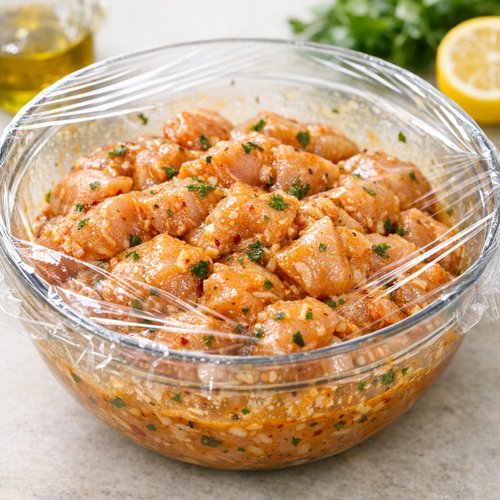
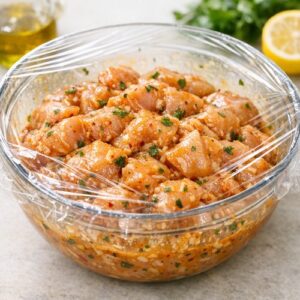
Add your prepared chicken pieces to the marinade and fold gently but thoroughly, ensuring every piece is well-coated. Cover the bowl with plastic wrap and refrigerate for at least 8 hours, preferably overnight (up to 24 hours). This isn’t just for convenience—this is where the magic happens. The yogurt’s lactic acid begins to denature the chicken’s proteins, tenderizing them while the spices and aromatics slowly penetrate deeper than they could in just a few minutes.
While the chicken marinates, prepare your onions. Cut your large red onion into 1-inch chunks (slightly larger than your chicken pieces). You can marinate these alongside the chicken if you prefer, which will slightly soften them and infuse them with spice flavor, or keep them separate until assembly.
Step 4: Thread Your Skewers with Strategic Spacing
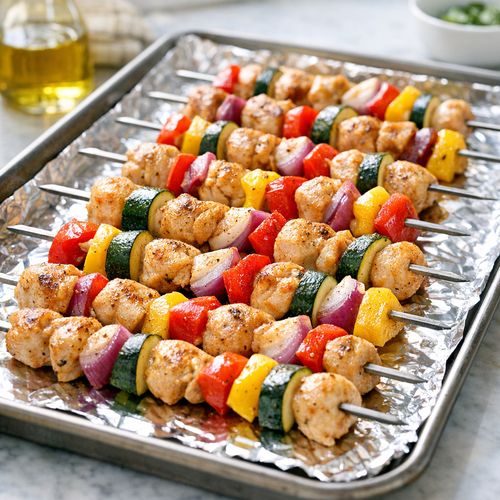
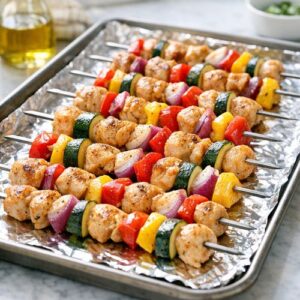
When ready to cook, preheat your oven to 425°F (220°C). Line a large rimmed baking sheet with aluminum foil for easy cleanup and arrange your metal skewers on it. Now comes the assembly that makes the difference: alternate chicken and onion pieces, leaving about ¼-inch space between each item. This spacing is critical—it allows hot air to circulate around each piece, ensuring even browning and preventing the kabobs from steaming.
Distribute your chicken and onion evenly across 6-8 skewers. You should have about 4-5 chunks of chicken per skewer, alternating with 3-4 chunks of onion. Don’t overcrowd the skewers. When chicken pieces are crammed tightly together, the insides steam rather than roast, and you lose that beautiful exterior browning.
Brush the marinade generously over all surfaces of the chicken and onions, reserving a little extra in the bowl. Don’t discard that marinade—you’ll use it for basting during cooking.
Step 5: The Roasting Process That Creates Restaurant-Quality Results
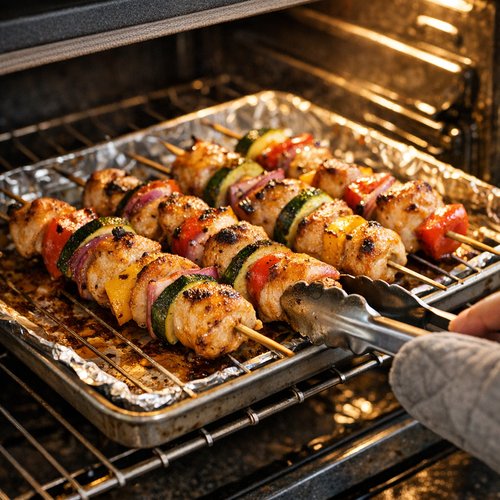
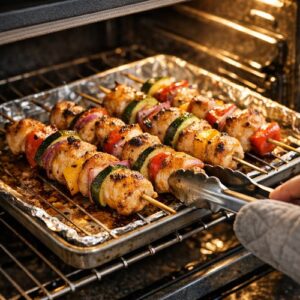
Place your prepared skewers in the preheated 425°F oven on the middle rack. Set a timer for 7 minutes. At the 7-minute mark, open the oven and use a pastry brush to apply another light coating of reserved marinade to the exposed surfaces. This is the secret to keeping these kabobs from drying out—rather than relying on a single marinade coat, we’re refreshing it partway through cooking, which keeps an protective layer on the exterior while the interior reaches temperature.
Return to the oven for another 6-8 minutes, until the chicken is deeply golden brown and the onions have some charring. The total cooking time should be approximately 13-15 minutes. To check for doneness, cut into the largest piece of chicken—the interior should be opaque with no pink, and the juices should run clear. If you’re using a meat thermometer, the internal temperature should reach 165°F (74°C).
Step 6: Rest and Serve with Purpose
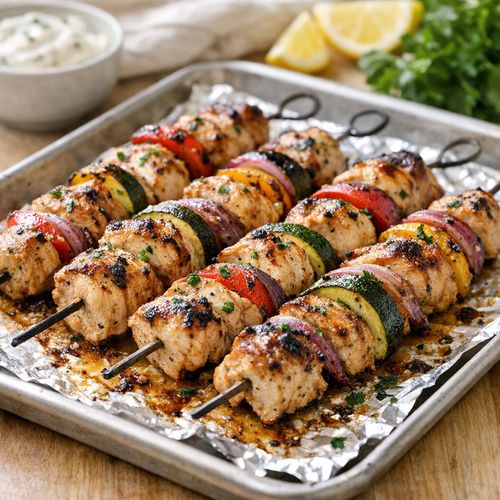
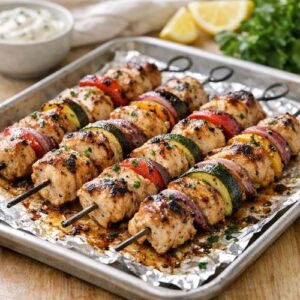
Remove the baking sheet from the oven and let the kabobs rest for 3-4 minutes before serving. This brief rest allows the proteins to relax and reabsorb moisture, ensuring each bite is as juicy as possible. Transfer the kabobs to a serving platter, and they’re ready to enjoy.
The Secret Sauce: Understanding Your Spice Blend
The signature flavor of these kabobs comes down to the precise balance of warm spices working together. Let me break down exactly why each spice matters and how they interact. This is where my multicultural upbringing in a kitchen where both Middle Eastern and Mediterranean flavors coexisted really shaped my understanding of spice layering.
Paprika is your foundation—it’s the most prominent spice by volume, providing the warm, slightly sweet pepper backbone. Spanish paprika (which has a bit of smokiness) is slightly different from Hungarian paprika (which is earthier), and either works beautifully here. The paprika creates both flavor and color, giving the marinade its rust-red hue.
Cumin grounds the blend with earthy, slightly warm undertones. It prevents the paprika from feeling one-dimensional and adds a subtle nuttiness that evokes traditional Middle Eastern cooking. The cumin-paprika combination is classic for good reason—they support rather than compete with each other.
Cinnamon is the secret weapon—but only in tiny amounts (⅛ teaspoon for the full batch). When measured correctly, cinnamon isn’t detectable as cinnamon; instead, it adds an almost imperceptible warmth and complexity that makes people say, “This tastes amazing, but I can’t quite place the flavor.” This is professional-level seasoning—adding depth without revealing its source.
Red pepper flakes provide heat and lingering warmth. Start with the full 1 teaspoon if you enjoy spice, but reduce to ½ teaspoon if you’re cooking for people who prefer milder flavors. The heat isn’t immediate and overwhelming; instead, it builds gradually across multiple bites.
Together, these spices create what food scientists call flavor complexity—your palate experiences multiple taste sensations in sequence rather than a single dominant flavor. This is why the marinade tastes so much better than if you simply seasoned chicken with salt and pepper.
Expert’s Nutritional Tip: Why Greek Yogurt Is the Tenderizer You Need
Beyond flavor, the Greek yogurt in this recipe is doing serious nutritional work. Greek yogurt contains higher protein density than regular yogurt (about 20 grams per cup versus 8-10 grams), which means when it’s coating your chicken, you’re actually layering additional protein. But more importantly, Greek yogurt contains live cultures and natural acids that break down the chicken’s muscle fibers—a process called enzymatic tenderization.
According to USDA nutrition data, 3 ounces of cooked chicken thigh (approximately one kabob’s worth) contains about 180 calories, 9 grams of fat, and 24 grams of complete protein. The yogurt marinade adds minimal calories (perhaps 5-10 per serving when shared across the whole batch) while significantly improving both texture and digestibility. The lactic acid in the yogurt also helps your body absorb iron from the chicken more efficiently—a process called iron bioavailability enhancement.
How to Make It Even Better Than the Original
Now that you understand the foundational recipe, let’s talk about how to elevate it beyond what even restaurants can achieve. Because you’re cooking at home, you have flexibility and access to ultra-fresh ingredients that large-scale operations simply can’t maintain.
- Use fresh herbs as a finish – Right before serving, sprinkle the hot kabobs with freshly chopped mint, parsley, and cilantro. Restaurants can’t do this because pre-chopped herbs oxidize and deteriorate. Fresh herbs at the last second add brightness and complexity that makes people ask for your recipe.
- Make a pomegranate molasses drizzle – Whisk together 2 tablespoons pomegranate molasses (available at specialty markets or online), 1 tablespoon honey, and 1 tablespoon water. Drizzle this over the hot kabobs just before serving. The tartness and subtle sweetness elevate the flavor profile in a way that feels unexpected and sophisticated.
- Toast your spices before the marinade – For even more depth, dry-toast your paprika, cumin, and red pepper flakes in a small skillet over medium heat for 45-60 seconds (don’t toast the cinnamon—it burns easily). This releases their essential oils and intensifies their flavors. Cool slightly before adding to your yogurt base.
- Add a tablespoon of pomegranate juice to the marinade – This adds subtle tartness that layers beautifully with the lemon and yogurt, creating a more complex flavor profile than the basic recipe.
- Use Persian or za’atar-spiced red onions – Instead of plain red onions, toss your onion chunks with 1 tablespoon olive oil and 1 teaspoon sumac before threading the skewers. The sumac adds a lemony brightness that complements the chicken beautifully.
Cost Comparison: Home vs. Restaurant
Let’s talk savings, because this is where homemade cooking becomes genuinely compelling. I calculated these prices using current grocery store averages (prices vary by region and season, but this gives you a realistic picture).
Cost per batch (makes 6-8 kabobs, serves 4-6 people):
- Greek yogurt (1 cup): $2.50
- Chicken thighs (2½-3 lbs): $7.50-$9.00
- Red onion (1 large): $0.75
- Lemon (1): $0.50
- Garlic, spices, oil (from pantry staples): $1.00
- Total per batch: $12.25-$14.25
Cost per serving (assuming 5 servings per batch): $2.45-$2.85 per person
Compare this to restaurant pricing ($18-$24 per serving including sides) and you’re looking at roughly $15-$22 in savings per meal. If your family enjoys these kabobs monthly, you’re saving approximately $180-$264 per year. More importantly, you control ingredients—no restaurant oils, no preservatives, no hidden additives.
Can I Store Chicken Kabobs In Oven Recipe?
Absolutely, and this is where meal prep becomes your secret weapon. Here’s exactly how to handle storage and reheating to maintain quality.
In the refrigerator: Store cooled kabobs in an airtight container for up to 4 days. The yogurt marinade acts as a natural preservative due to its acidic nature and live cultures, so these keep longer than plain roasted chicken would.
In the freezer: You can freeze cooked kabobs for up to 3 months. Cool completely, then wrap each skewer tightly in plastic wrap and place in a freezer bag. Label with the date. Thaw overnight in the refrigerator before reheating.
Make-ahead option: You can prepare the marinade and chicken up to 24 hours ahead, keep refrigerated, then simply thread the skewers and roast when you’re ready to eat. This is perfect for entertaining—all your prep happens the night before, and dinner takes 15 minutes on serving day.
Reheating: The best method is a 350°F oven for 8-10 minutes until heated through, which rehydrates the chicken and prevents it from drying out. You can also reheat in a skillet over medium heat, about 3-4 minutes per side. Avoid the microwave, which will create rubbery texture.
Nutrition Information
Per serving (based on one kabob, assuming 6 kabobs total): 240 calories | 11g fat | 28g protein | 6g carbohydrates | 1g fiber | 550mg sodium
This is compared to restaurant versions, which typically run 380-420 calories per serving due to larger portion sizes, additional oils, and heavier side dishes. Our homemade version is protein-forward, making it excellent for muscle recovery or simply maintaining satiety through the afternoon.
The USDA’s MyPlate guidelines recommend 5-6.5 ounces of protein daily for average adults; a single kabob provides about 28 grams, contributing more than half your daily requirement in one item. The fat content comes primarily from the chicken’s natural fat and the olive oil in the marinade—both are unsaturated fats that support heart health and nutrient absorption.
What to Order/Make Alongside for the Full Experience
These kabobs deserve complementary sides that echo their Mediterranean-Middle Eastern flavor profile. To recreate the complete restaurant experience at home, consider pairing your chicken kabobs with dishes that balance richness with brightness.
Creamy yogurt sauce: Whisk together 1 cup plain Greek yogurt, 2 minced garlic cloves, 1 tablespoon fresh lemon juice, fresh dill, and salt. This cooling side balances the warm spices and gives guests a sauce for dipping.
Charred vegetable sides: Roast additional vegetables alongside your kabobs—try baby carrots in the oven tossed with the same spice blend, or halved zucchini and bell peppers. These pick up beautiful char and deepen in sweetness when roasted at high heat.
Fresh salad with herbs: Create a salad with mixed greens, cucumber, tomato, red onion, and fresh herbs (mint, parsley, cilantro), dressed simply with lemon juice and olive oil. This provides crunch and brightness that cuts through the richness of the chicken.
Rice pilaf: Make a simple rice pilaf with toasted orzo or basmati, cooking the rice in chicken broth with a bay leaf and pinch of the same spice blend. This absorbs the kabobs’ drippings and becomes incredibly flavorful.
Warm pita bread or flatbread: These are essential for eating the kabobs—guests can slide chicken and onions off the skewers directly into warm pita, then add yogurt sauce and fresh vegetables.
- Greek salad with Kalamata olives and feta – adds salty, tangy contrast to the warm, tender chicken
- Hummus and baked pita chips – provides creamy richness and something to scoop with
- Tabbouleh (parsley salad with bulgur, lemon, and olive oil) – adds herbaceous freshness
- Roasted garlic cloves and bread – allows guests to create their own flavor intensity
Make-Ahead Guide: Plan Your Cooking Strategy
One of the beauties of this recipe is its flexibility with timing. Here’s exactly how to prepare these kabobs strategically based on your schedule.
Two days before: Shop for ingredients. Arrange to buy chicken on this day rather than the day before—it’s fresher and will marinate better. Make your marinade and refrigerate in an airtight container if desired.
The day before: In the afternoon or evening, prepare the marinade (if not already done) and combine with the chicken. Cover and refrigerate. Chop your onions and store them separately in a container. This way, when you arrive home on serving day, you’re just threading skewers and roasting.
Serving day, 30 minutes before eating: Preheat the oven to 425°F. Thread the skewers, brush with marinade, and place in the oven. Start your side dishes (rice pilaf, salad prep) so everything comes together simultaneously.
If you’re using this for weeknight meal prep: Make the full batch on Sunday, cool completely, and divide into containers for Monday through Thursday lunches. Reheat in a 350°F oven for 8-10 minutes before eating. Pair each container with a portion of salad and some fresh pita.
Common Mistakes to Avoid
After developing this recipe extensively and teaching it to dozens of home cooks, I’ve identified the most common pitfalls. Knowing what to avoid will ensure your first attempt is genuinely successful.
Mistake 1: Using chicken breast instead of thighs. While leaner, chicken breasts are less forgiving during cooking. Even just 2-3 minutes of overcooking makes them dry and stringy. Thighs have more fat, which acts as insurance against overcooking. If you must use breast, pound them to uniform ¾-inch thickness and reduce cooking time to 10-12 minutes.
Mistake 2: Skipping the overnight marinade. Some people think they can “quick marinate” for 2-3 hours. This doesn’t give the yogurt enough time to work its tenderizing magic, and the flavors remain surface-level rather than penetrating the meat. Those 8-24 hours aren’t wasted time—they’re when transformation happens.
Mistake 3: Packing the skewers too tightly. When pieces touch or are crammed together, steam builds up and the chicken essentially poaches rather than roasts. You lose browning and create a pale, less appetizing finish. Leave visible space between pieces for air circulation.
Mistake 4: Not patting the chicken dry before marinating. Surface moisture prevents even marinade contact and can create a diluted marinade as the chicken’s natural juices release. Pat dry first, and you’ll have more consistent results.
Mistake 5: Cooking at too low a temperature. Some people reduce the oven to 375°F, thinking it prevents drying. Instead, it extends cooking time, actually increasing the risk of dryness. 425°F is your target—high enough to create browning in 13-15 minutes, which keeps the interior juicy.
Seasonal Variations: Adapt Throughout the Year
While this recipe is excellent year-round, seasonal adjustments allow you to celebrate ingredient availability and adjust for temperature changes.
Spring/Summer version: Add fresh herbs directly to the marinade—1 tablespoon fresh mint and 1 tablespoon fresh cilantro, minced finely. In warmer months, you can also cook these on an actual grill (not just the oven) at medium-high heat for 12-14 minutes, turning every 3-4 minutes. Serve with lighter sides like cucumber salad and chilled yogurt sauce.
Fall/Winter version: Increase the warming spices slightly—add an extra ¼ teaspoon cinnamon and increase the red pepper flakes to 1½ teaspoons. Include roasted winter squash as a side (butternut or acorn roasted until caramelized). Serve with warm rice pilaf and hot pita bread.
Late summer option: Thread cherry tomatoes alongside chicken and onions. They’ll burst slightly during cooking and their juices will mingle with the marinade, creating a sauce at the bottom of the pan. Use these pan juices to dress your rice pilaf.
Spring option: Add fresh spring onions (the white and light green parts) instead of red onion, or use a combination. Spring onions become incredibly sweet and mellow when roasted. Thread fresh lemon slices between pieces for extra brightness.

Chicken Kabobs In Oven Recipe
Ingredients
Method
- In a medium mixing bowl, combine your Greek yogurt with the freshly squeezed lemon juice and olive oil. This is where the temperature of your yogurt matters—if it's straight from the refrigerator, it's thick and dense. We want to whisk these three ingredients together until the mixture becomes smooth and slightly thinner, creating a silky base that will coat the chicken evenly. The whisking action physically breaks down the yogurt's structure slightly while incorporating air, which helps the marinade penetrate more effectively. Next, add your minced garlic, lemon zest, and all the spices: paprika, cumin, cinnamon, red pepper flakes, salt, and black pepper. Whisk thoroughly for about two minutes, making sure the spices are fully incorporated and there are no clumps. The key here is that you want the red pepper flakes to be distributed evenly throughout—if they clump together, you'll bite into pockets of intense heat. The marinade should smell incredibly aromatic at this point, with distinct notes of lemon, warm spices, and garlic.
- Pat your chicken thighs dry with paper towels. This step, which many home cooks skip, is actually crucial for even browning later. Moisture on the surface will turn to steam, preventing the Maillard reaction (the chemical process that creates browning and deeper flavors). Trim away any obvious fat pockets or connective tissue, but leave some fat intact—this is what keeps thighs juicy during cooking. Cut the chicken into 1½-inch pieces. This size is deliberate: larger pieces would cook unevenly (outsides overdone before centers reach temperature), while smaller pieces would dry out. Err on the side of slightly larger pieces rather than smaller, as the yogurt marinade will protect the exterior from drying. If you have a piece that's significantly longer or thinner than others, you can fold it or cut it to match the general size.
- Add your prepared chicken pieces to the marinade and fold gently but thoroughly, ensuring every piece is well-coated. Cover the bowl with plastic wrap and refrigerate for at least 8 hours, preferably overnight (up to 24 hours). This isn't just for convenience—this is where the magic happens. The yogurt's lactic acid begins to denature the chicken's proteins, tenderizing them while the spices and aromatics slowly penetrate deeper than they could in just a few minutes. While the chicken marinates, prepare your onions. Cut your large red onion into 1-inch chunks (slightly larger than your chicken pieces). You can marinate these alongside the chicken if you prefer, which will slightly soften them and infuse them with spice flavor, or keep them separate until assembly.
- When ready to cook, preheat your oven to 425°F (220°C). Line a large rimmed baking sheet with aluminum foil for easy cleanup and arrange your metal skewers on it. Now comes the assembly that makes the difference: alternate chicken and onion pieces, leaving about ¼-inch space between each item. This spacing is critical—it allows hot air to circulate around each piece, ensuring even browning and preventing the kabobs from steaming. Distribute your chicken and onion evenly across 6-8 skewers. You should have about 4-5 chunks of chicken per skewer, alternating with 3-4 chunks of onion. Don't overcrowd the skewers. When chicken pieces are crammed tightly together, the insides steam rather than roast, and you lose that beautiful exterior browning. Brush the marinade generously over all surfaces of the chicken and onions, reserving a little extra in the bowl. Don't discard that marinade—you'll use it for basting during cooking.
- Place your prepared skewers in the preheated 425°F oven on the middle rack. Set a timer for 7 minutes. At the 7-minute mark, open the oven and use a pastry brush to apply another light coating of reserved marinade to the exposed surfaces. This is the secret to keeping these kabobs from drying out—rather than relying on a single marinade coat, we're refreshing it partway through cooking, which keeps an protective layer on the exterior while the interior reaches temperature. Return to the oven for another 6-8 minutes, until the chicken is deeply golden brown and the onions have some charring. The total cooking time should be approximately 13-15 minutes. To check for doneness, cut into the largest piece of chicken—the interior should be opaque with no pink, and the juices should run clear. If you're using a meat thermometer, the internal temperature should reach 165°F (74°C).
- Remove the baking sheet from the oven and let the kabobs rest for 3-4 minutes before serving. This brief rest allows the proteins to relax and reabsorb moisture, ensuring each bite is as juicy as possible. Transfer the kabobs to a serving platter, and they're ready to enjoy.
Nutrition
Tried this recipe?
Let us know how it was!FAQs
Can I make this recipe with chicken breast instead of thighs?
You can, though results will be less forgiving. Chicken breast is very lean and dries out quickly—you’re essentially racing the clock. If using breast, pound the pieces to uniform ¾-inch thickness so they cook evenly, and don’t marinate longer than 8-10 hours (the acid can make the exterior mushy). Reduce cooking time to 10-12 minutes total. Consider using a meat thermometer, checking for 165°F internal temperature, and removing from the oven the moment it hits that mark. Ideally, stick with thighs—they’re more forgiving and cheaper.
What if I don’t have Greek yogurt? Can I substitute regular yogurt?
Regular yogurt works, but results won’t be quite the same. Greek yogurt is thicker and more concentrated in protein and probiotics, which is why it’s superior for marinading. If using regular yogurt, use 1¼ cups instead of 1 cup to achieve similar thickness. The marinade will be slightly thinner, so you might need to reduce the olive oil to ½ tablespoon to prevent it from becoming too liquid. Sour cream is another option—use 1 cup sour cream with 2 tablespoons Greek yogurt (if you have it) for better texture.
Can I use wooden skewers instead of metal?
Yes, but soak them in water for 30 minutes before threading. Without soaking, wooden skewers dry out and catch fire under high heat. Metal skewers are preferable because they conduct heat directly to the center of larger chicken pieces, creating more even cooking. They also last indefinitely if cared for (hand wash, don’t put in dishwasher).
What should I do if my oven temperature isn’t accurate?
More Recipes You Will Love
- This Easy Chicken Dinner – Worth adding to your recipe collection.
- My Weeknight Chicken Recipe – Worth adding to your recipe collection.
- This Flavorful Chicken Dish – Worth adding to your recipe collection.
This is more common than people realize. Ovens can drift 25-50°F from their displayed temperature. Invest in an inexpensive oven thermometer (around $10) and check your oven’s actual temperature by placing it in the center of the oven at the preheat setting. If it reads lower than 425°F, increase your set temperature accordingly. If your oven runs hot, decrease the temperature slightly. Alternatively, use an instant-read meat thermometer to check the chicken’s internal temperature—165°F is your target, regardless of time.